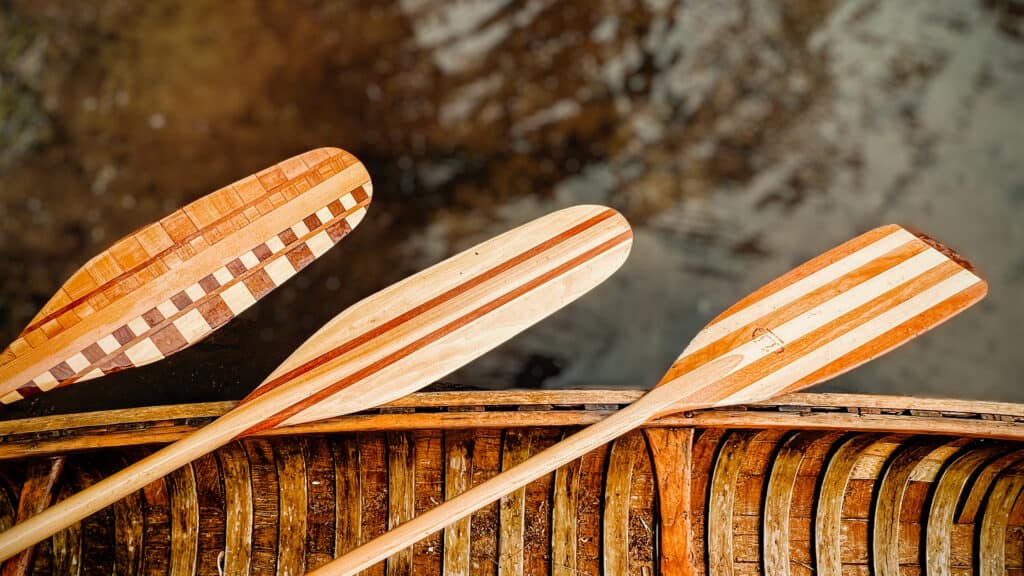
Paddling down a river or lake gives you access to islands, stunning rock walls, even lounging turtles on a log. Most of the time, the only way to experience this is by canoe, kayak or paddleboard. Many areas on a body of water are inaccessible by foot or motor boat. Yet, there is a negative to paddling – it can be painfully tiresome! What many refer to as a rewarding adventure can become a miserable experience without the correct canoe paddle sizing.
In this beginner’s canoe paddle guide, you’ll learn how to measure for the right canoe paddle size, why weight and material matter, and how to choose the correct grip for the best paddling experience on your next canoe trip. So, what are we waiting for, let’s dive in and get you paddling with confidence and without pain!
Disclosure: Posts may contain affiliate links. Purchases made through our links result in a small commission to us at no charge to you. We only recommend products that meet our brand standards based on hands-on impressions, testing, or thorough research using official product information, depending on the piece.
How To Size for the Right Paddle Length
Before answering what size canoe paddle do I need for my height, consider the nature of your canoe trips, and the width of your canoe. A canoe paddle that is too long or too short can lead to discomfort and fatigue, which will impact your performance on the water. Like Goldilocks, we need to find one that is ‘just right’. There are many ways to measure for the right paddle size, though, these techniques are by far the most common.
Sizing a Canoe Paddle by Height and Canoe Width
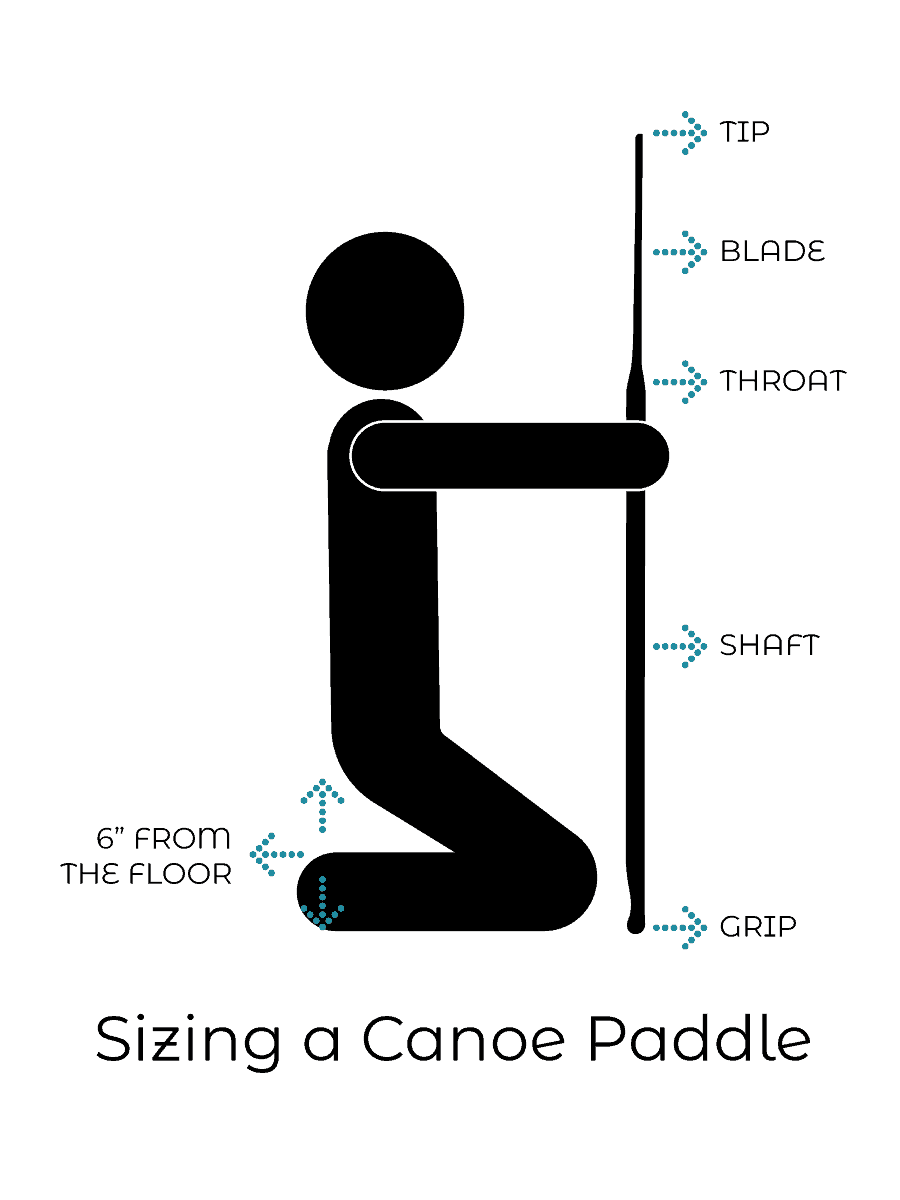
This first method in finding the correct canoe paddle size by height is measured with a canoe in the water. For those who do not have access to a canoe yet, your local outfitter can help take a paddle measurement in-store or you can use the second sizing method below.
1. How To Measure for a Canoe Paddle with a Canoe:
- Start by sitting inside your canoe
- Measure the distance from your nose to the water line of the canoe. This is your canoe paddle measurement.
2. Canoe Paddle Sizing by Height:
- Kneel with your bottom 6 inches off the floor.
- Take a straight shaft canoe paddle and place the top of the grip on the floor. The throat of the paddle (where the shaft meets the blade) should be between your nose and chin.
Canoe Paddle Length Guide
- Straight shaft paddle length is between 52″ to 60″.
- Bent shaft paddle sizing starts between 48″ and 54″. Once you have determined the correct size, deduct 2 inches from your measurement. This should be your ideal length for bent shaft paddles.
Canoe Paddle Size Chart: Quick Reference by Height
Prefer a quick reference? Use this chart to find your starting point, then adjust based on canoe width and paddling style as described above.
| Paddler Height | Straight Shaft | Bent Shaft |
|---|---|---|
| Under 5’2″ (157cm) | 52″ – 54″ | 50″ – 52″ |
| 5’2″ – 5’6″ (157 – 168cm) | 54″ – 56″ | 52″ – 54″ |
| 5’6″ – 5’10” (168 – 178cm) | 56″ – 58″ | 54″ – 56″ |
| 5’10” – 6’2″ (178 – 188cm) | 58″ – 60″ | 56″ – 58″ |
| Over 6’2″ (188cm+) | 60″+ | 58″+ |
*Note: Add 2″ for wider canoes or stern paddling position.
Looking for the best of the best?
Skip the research. See the trail-tested outdoor equipment that actually made the permanent rotation.
Should I Get a Short or Long Paddle for Canoe?
A longer canoe paddle is best if you plan on covering more distance and/or paddling in larger bodies of water. Yet, a short paddle is ideal if you plan on maneuvering in smaller bodies of water.
Another factor to consider is the width of your canoe. A wider canoe requires a longer paddle, while a narrower canoe requires a shorter paddle. A good rule of thumb is to add two inches to the length of your paddle for wider canoes or if you’re a stern paddler.
Comfort and better performance on the water is achieved when you choose the right canoe paddle length. Without discomfort and fatigue, you can spend more time enjoying the surroundings and less time messaging your wrists and arms.
Canoe Paddle Weight and Material
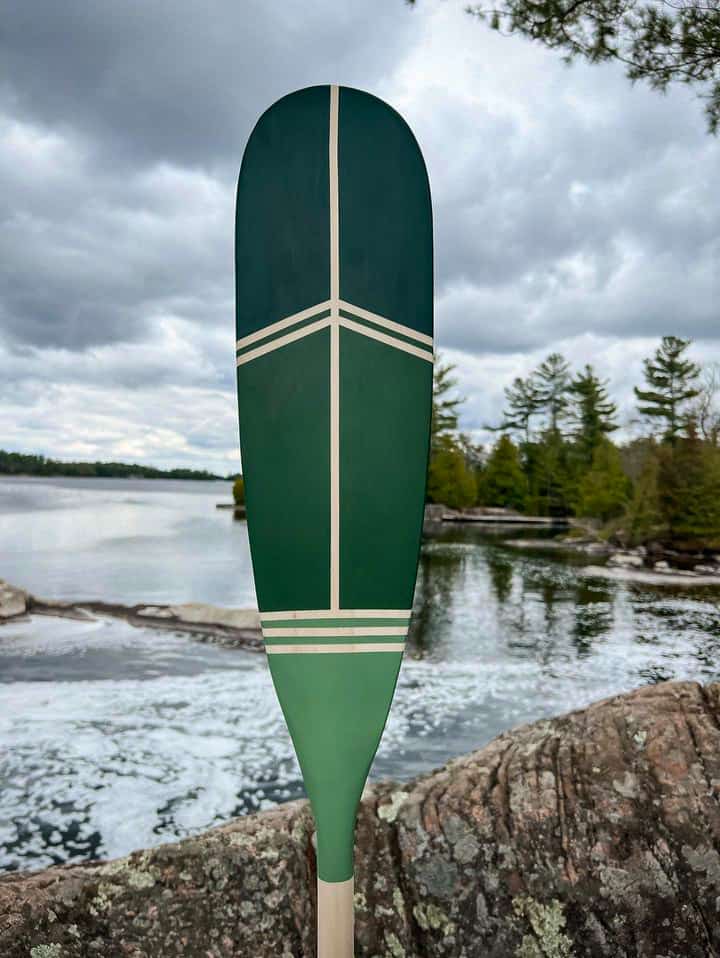
The Stoney Paddle: Hand-Painted, Canadian-Made Paddle by Paddle Ron
Choosing the perfect paddle doesn’t stop with sizing, material and weight also play a huge role. The heavier the paddle, the harder your arms will need to work, which of course, leads to fatigue and decreased performance.
On the other hand, a lightweight paddle may not give you enough power and control in the water. So, let’s look at the most common types of canoe paddles to see which is the best material for a canoe paddle that will benefit you the most, without tiring you out.
Wooden Canoe Paddles
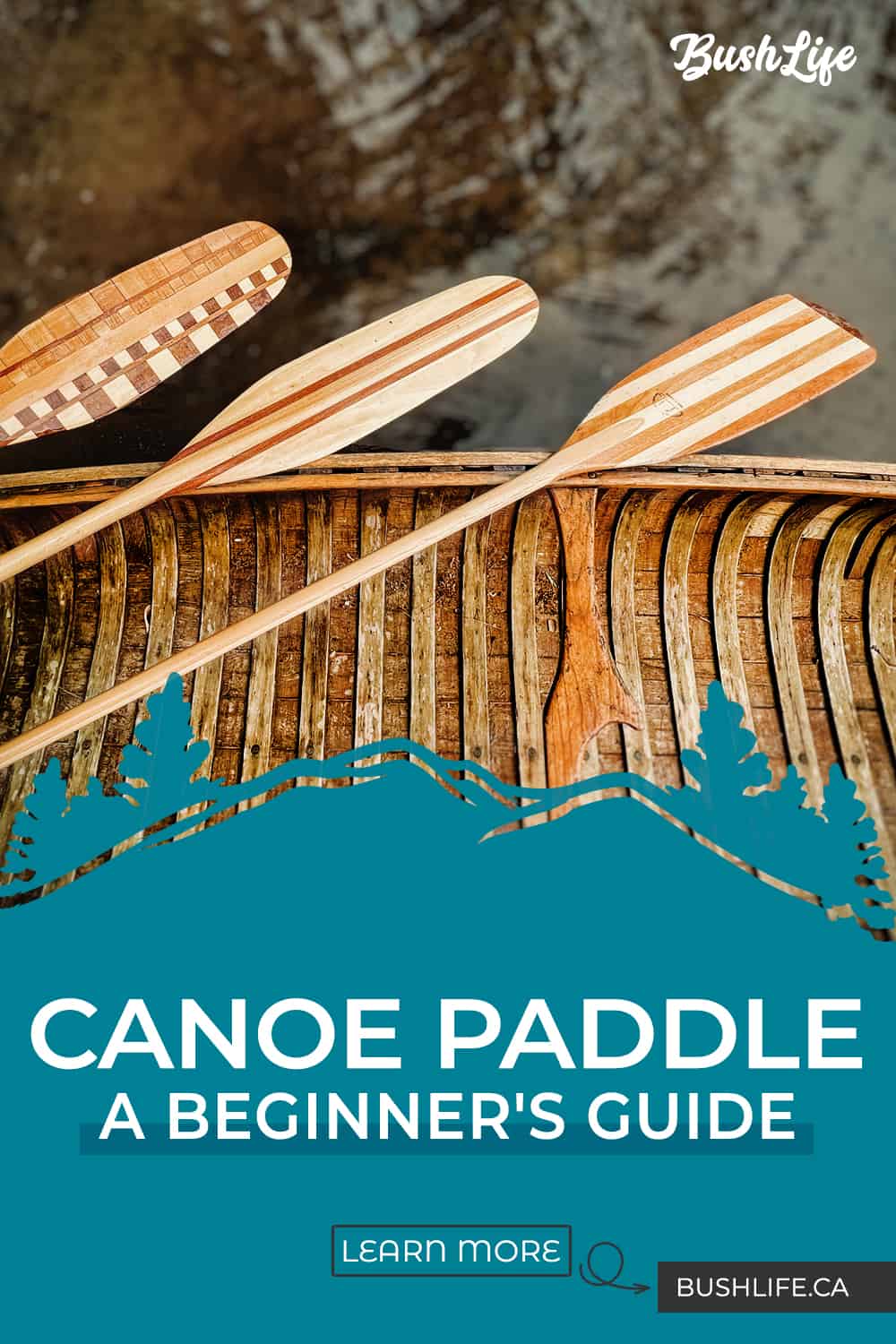
Many canoeists prefer wooden paddles over aluminum, fibreglass or carbon fibre. There is just something so nostalgic about a wooden paddle that compliments a canoe. Wooden canoe paddles have character, especially when mixed with various woods – like you see with Bending Branches paddles.
The downside to wood is weight and it requires some upkeep to keep its characteristics. On the bright side, this type of paddle is relatively inexpensive and easy to repair.
The added bonus to a wood paddle is that they can be customized to suit your personal style. Paddle Ron, a Canadian hand paints bespoke canoe paddle designs to suit the cottage or the local lake. You can check out her canoe paddle art here for something more personalized.

Slice water like butter; don't fight your paddle anymore! Weighing in at 20 oz., the Bending Branches Loon Canoe Paddle is light and easy to handle. Made from basswood and maple, it not only looks great but feels fantastic in your hands, thanks to the cozy palm grip that makes every stroke a breeze. Perfect for calm lakes or gentle rivers. Plus, with three lengths to choose from, 54", 57", and 60", you can find the perfect fit for your canoeing style.
Aluminum
Paddles made from aluminum are light, durable and affordable. Unfortunately, it comes at a cost, and that cost is comfort when paddling canoes on longer trips. They are also very rigid.
Fiberglass / Carbon Fiber Canoe Paddles
A more expensive but with a good balance of weight and durability are fibreglass paddles. These are the lightest and are available in many colours and designs to suit your personality type.
Serious paddlers opt for fibreglass for its high performance and speed. Nonetheless, they can be brittle and need extra care when handling. Paddleboarders and whitewater canoeists usually use fibreglass paddles as well.
Choosing the right paddle weight and material ultimately depends on your personal preference, physical ability, and budget. Before settling on a paddle, test out different weights and materials before making that final decision. For us, we prefer a wooden canoe paddle because of its look and the way it feels in the hand. When paddleboarding we opt for a carbon fibre paddle just for its lightness.

Tired of heavy paddles dragging you down? Weighing just 16 oz., this lightweight carbon fiber paddle is designed for speed and agility, making it perfect for fast water and quick maneuvers. With a comfortable freestyle palm grip and a durable nylon-reinforced blade edge, you’ll glide effortlessly through long flat water trips
Canoe Paddle Sizing by Blade Shapes
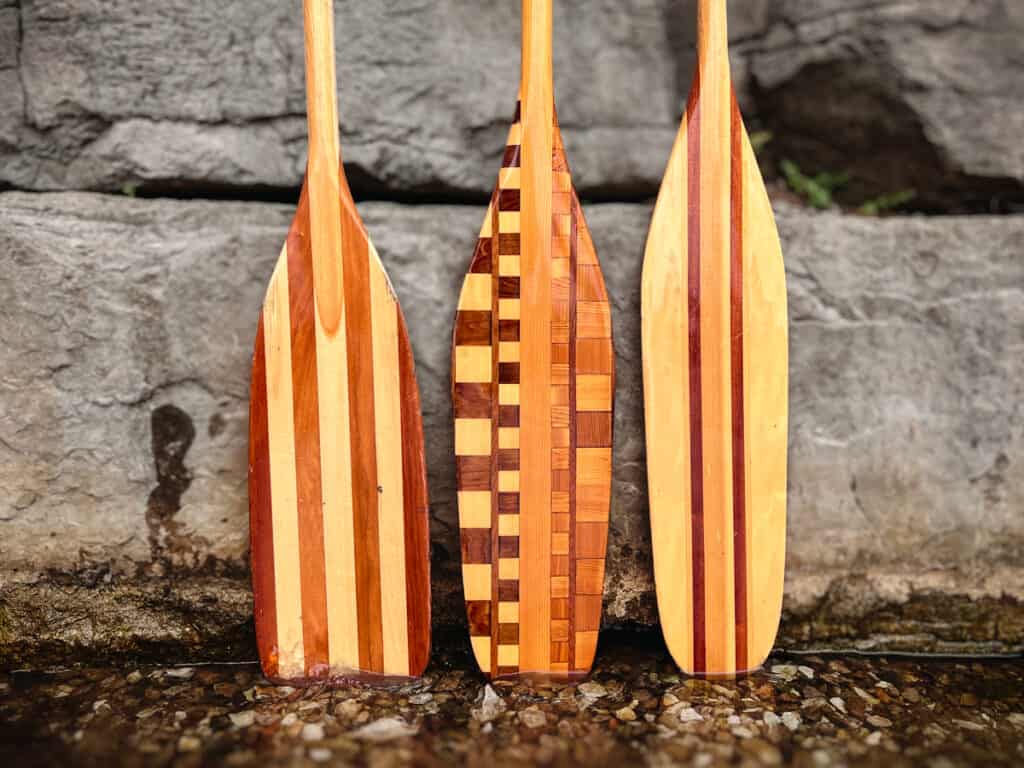
Once you determine the right canoe paddle size and have a paddle material in mind, it’s time to dissect the different parts of a canoe paddle. And, yes it is something you should know as it plays a huge role in paddling. Let’s start with the paddle blade shapes.
The canoe blade is the widest part of the paddle, it’s the piece that goes into the water. When choosing the correct blade shape, think of the type of water you will be paddling. Here we’ll cover two popular types of paddle blades.
Otter Tail and Beavertails Paddle Shapes
First up, the traditional Otter tail canoe paddle offers leverage for smooth strokes and greater control. These long slender blades are ideal for lakes and calmer waters.
Second is the Beavertail canoe paddle. It is shorter and wider than the otter tail. This makes it an optimal paddle for rivers and shallow water. The Beavertail paddles need less effort, offer lightning-fast strokes and are the easiest paddles to use.
As a side note, traditional names like Beavertail and Otter Tail can be confusing. Each paddle manufacturer (or anywhere you look) seems to have a different take on what a Beavertail or an Otter tail paddle looks like. There are also variations on these shapes. So let’s look at it as large (wider blades) vs narrow and what the differences are.
Large canoe blades advantages and disadvantages:
- Efficient and give optimal paddling leverage
- Every stroke is more effective
- Accelerate faster and manoeuvre quickly, with plenty of bite for rolls and braces (where you lay the paddle blade horizontally on the surface to bring the canoe upright)
- Can be tiring over long periods and tricky to control in windy situations
Small canoe blades advantages and disadvantages:
- Easy on your muscles and joints
- Provide less surface area to be pushed around by the wind
- You need a faster cadence to maintain cruising speed
- Making quick manoeuvres can be more difficult
Blade Size
Today, the length of the blade is often shorter and wider with the average blade size being 20″ long and 8 ½” wide. This allows greater access to various aquatic environments. Larger paddle blades also provide better stability when executing braces. The rounded corners and arced or radiused tip of the blade allow for a quieter entry and exit from the water.
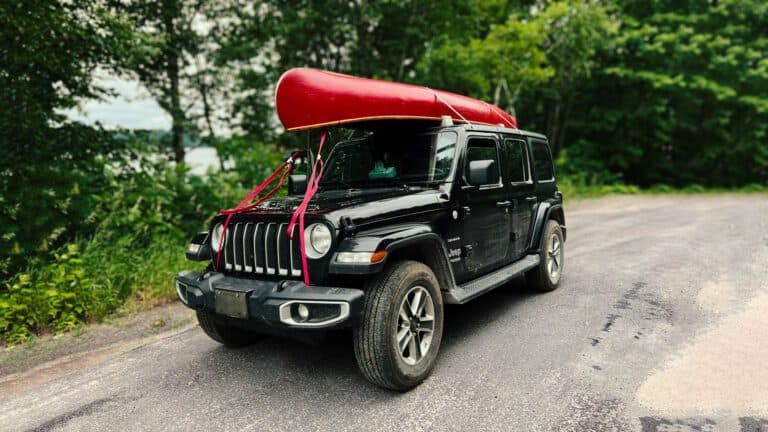
Do You Know How to Transport Your Canoe? Use our quick step-by-step guide to transport your canoe the right way.
Choosing Paddle Grips and Shaft Types
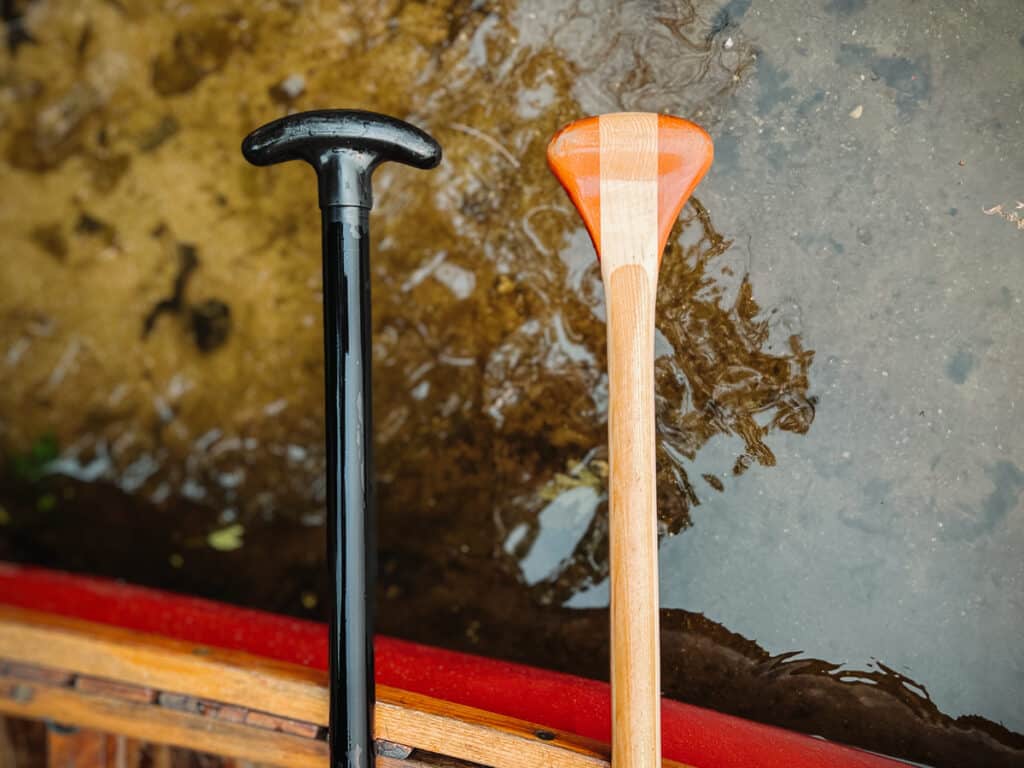
The grip is the top part of the canoe paddle, and the shaft is the stick of the paddle between the grip and blade. Your canoe paddle grip and shaft type are just as important as your blade shape when choosing the best canoe paddle.
A comfortable grip can reduce hand fatigue and increase control, while having the correct shaft type can provide the necessary flex and stiffness for efficient paddling. The two most common paddle grips for paddlers are the T-grip and the palm grip.
T-Grip vs. Palm Grip
The T-grip canoe paddle, preferred by whitewater paddlers, is a secure design that lets you wrap your fingers around the handle. It allows the paddler to know the exact blade position when executing different strokes. Navigating challenging rapids is easier because of T-grips flat top and bottom.
The palm grip canoe paddle is preferential for paddlers on diverse waters. This type of grip is more ergonomic. It often has extra thickness added to the front and back to better fit the contours of your hand. Plus, it has enough shape to give you a firm grip but lets you hold it loosely when desired.
When choosing a paddle grip, the grip must be aligned with the blade. Make sure that the grip is smooth and free from bumps, as these will lead to blisters. As you use your canoe paddle, you will notice that rough spots will start to form. Sand these down to prolong the lifespan of your wooden paddle, as leaving them unaddressed won’t be a pleasant experience.
Discovering Different Canoe Shaft Types
The shaft type can also affect your performance on the water and also impact paddle selections.
- A straight-shaft canoe paddle is excellent for beginners or those who prefer a classic feel.
- A bent-shaft canoe paddle, on the other hand, can provide a more ergonomic feel and reduce wrist fatigue during long paddles.
- A round paddle shaft tends to rotate in your grip when paddling hard.
- Some paddlers opt for an oval paddle shaft, which leads to less rotation, blisters and hand fatigue, making it easier to control and offer a greater comfort range.
How To Choose a Canoe Paddle Wrap-Up

After paddling Ontario’s lakes and rivers for years, here’s where we land:
- For recreational paddling and day trips – a wooden paddle in the 54″ – 57″ range depending on your height. The Bending Branches Loon is our go-to. Light enough for a full day, beautiful on the water, and forgiving for beginners.
- For longer distance or fitness paddling – go carbon fibre and bent shaft. Your wrists will thank you after hour three.
- For whitewater or rivers – shorter, wider blade, T-grip. Control matters more than distance out there.
Whatever you choose, get the right length first. Everything else is preference. A paddle that’s 2″ too long will ruin a trip faster than bad weather.
👉 Share Your Paddling Adventures! What’s your favorite canoe paddle? Tell us in the comments below!
More Waterproof Gear From BushLife You Might Enjoy:
- Waterproof Duffle Bag Review: protect your gear on the water
- Caperlan Backpack: the fishing backpack that is small enough for the canoe
Bookmark this post on Pinterest for future reference!