
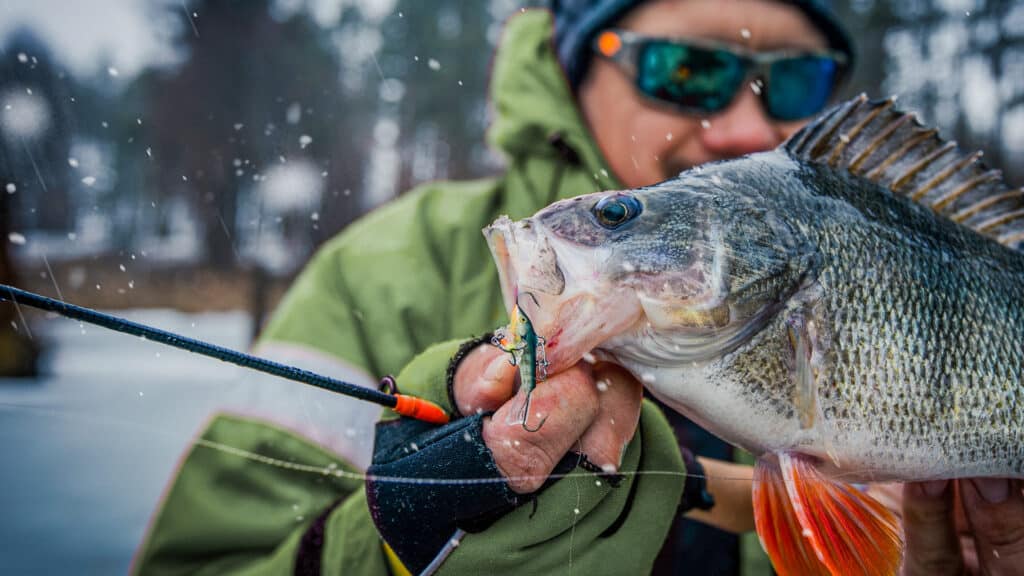
Winter can be long and harsh without something to do. Ice fishing is a great way of getting outside and embracing the winter season. It’s an adventure that can be experienced alone or with friends. Either way, the thrill of being on the ice and catching delicious fish is another way to enjoy what can be a very long winter.
From ice fishing essentials to ice fishing facts, we will guide you in buying the right gear. You will learn to master the art of drilling the perfect ice hole in detail. Not to mention, discovering valuable techniques for finding the top ice fishing spots, selecting the right ice fishing bait, and attracting fish like a pro. So, what are we waiting for? Let’s get started and learn how to ice fish.
Disclosure: Posts may contain affiliate links. Purchases made through our links result in a small commission to us at no charge to you. We only recommend products that meet our brand standards based on hands-on impressions, testing, or thorough research using official product information, depending on the piece.
Do You Need a Fishing License for Ice Fishing?
In Ontario, you are required, by law, to have a fishing license and an outdoor card. Under 18 and over 65, you do not need to purchase a license. Don’t forget to read the ice fishing laws on what and where you can catch, bait, possession limits, and dates. These regualtions are in place to maintain a sustainable ice fishing season.
Do You Know How To Fish? Learn how to start fishing easily with our introductory guide.
Ice Fishing Safety Begins With Safe Ice
Before casting your first cast, safety should always be your top priority. Your life is worth so much more than what you might catch!
First and foremost, ice fishing safety tips start with checking the ice conditions before stepping onto it. Be on the lookout for thin ice areas.
How Thick Should Ice Be for Fishing?
Minimum ice thickness of four inches of clear blue ice is generally considered the safest ice for walking. For a vehicle to be on the ice, you need at least 8 to 12 inches of solid ice.
Never step onto the ice without ice safety picks or ice claws! Wearing ice fishing safety gear is a good idea. You can wear a life jacket (life preserver), or better yet, a flotation suit like the one from Piscifun. Instead of having so many suits, we wear our F.A.S.T. FXR snowmobile suits – pricey, but reliable!
Just as important is dressing suitably for the cold weather. There is nothing worse then being cold and having to wrap up your fishing trip. We have an entire post on how to stay warm when ice fishing – the gist of it – it’s all in the layers!
Sweat eventually soaks through layers – make sure your base layer is moisture-wicking. From there, layer your clothing to trap warmth. Wear insulated and waterproof boots. Don’t forget to protect your extremities with gloves, hats, and a neck gaiter.
Get into the habit of carrying a package of HotPaws and toe warmers! Should your hands or feet get cold, you’ll be glad you have these on hand. If it’s in the budget, invest in a pair of heated gloves or socks, which can make your fishing experience much more enjoyable. Don’t forget to bring extra gloves!
Lastly, never venture alone on a frozen lake! Always inform someone of your ice fishing plans and expected return time. And for goodness sake, learn to recognize the signs of hypothermia – it’s not a joke! Check out our ice fishing picks post to learn more about hypothermia and to download our safe ice thickness chart.
Ice Fishing Equipment List for Beginners
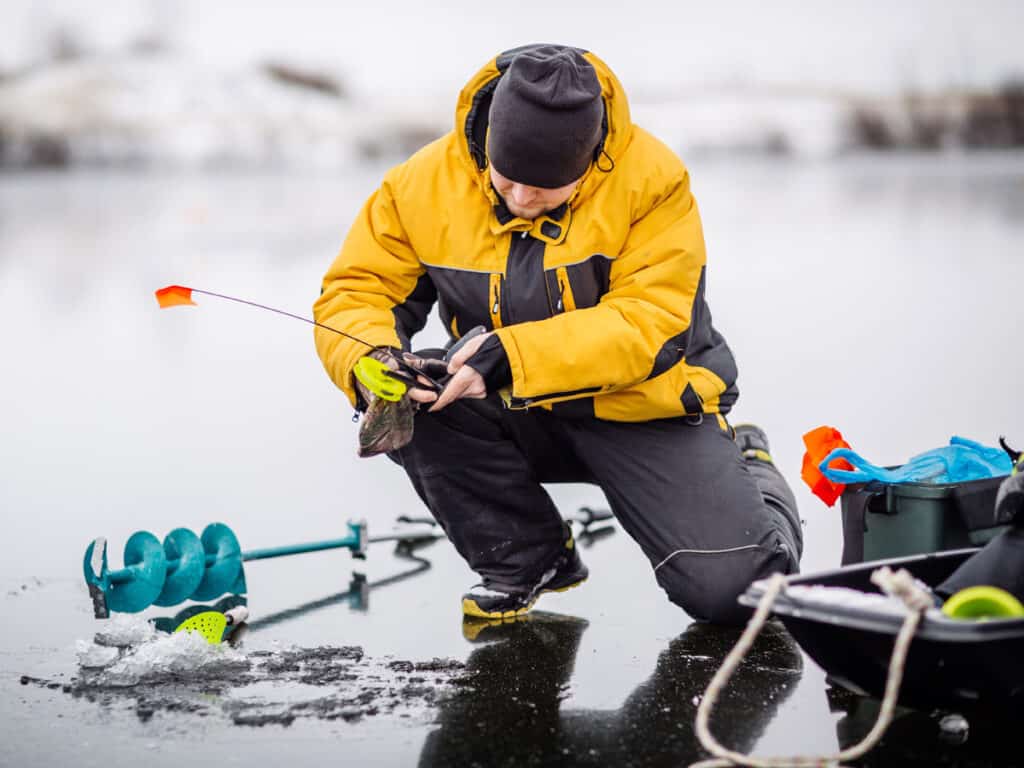
Now for the good stuff – equipment! Don’t think you need to spend a fortune on ice fishing gear – start with what’s affordable and see if you like it. Better yet, borrow from a friend. You might find that ice fishing is not for you or you’ll absolutely love it, at which point you can upgrade to better gear.
To start ice fishing, all you basically need is an ice fishing rod, auger, scoop, bait and a bucket to sit on. The rest are extras that make fishing a easier and definitely more comfortable. So, let’s start with rods. By the way, to save you time, our Amazon page features all the best ice fishing gear for a beginner in one place.
Ice Fishing Rods
When shopping for an ice fishing rod, you want a short, lightweight, sturdy ice fishing rod and reel combo that can withstand harsh temperatures and handle the weight of bigger fish. For panfish, a specialized panfish rod can be a great choice, offering the sensitivity needed for detecting light bites.
Again, as a first timer, there is no need to spend a fortune here – you can opt for budget fishing gear and still catch fish. For the most part, in Ontario, you are allowed to use two lines. When selecting ice fishing reels, look for models that perform well in cold conditions and pair well with your chosen rod. Most anglers prefer spinning reels for ice fishing, as they are easier to use.
Ice Auger
If you’re not familiar with an ice fishing auger, it’s a specialized tool for drilling holes in the ice, which you will definitely need. You can choose between a manual or gas-powered auger. Gas-powered are getting harder to find, and are being replaced by electric steel augers. Not sure how reliable they are in 4+ feet of ice.
We use a hand auger, which works perfectly fine – it cuts holes rapidly and with relative ease. Still, it does get tiring with thicker ice. You could also get away with using an auger that is powered by a cordless drill. Whichever type you choose, make sure your ice fishing auger is sharp and well-maintained for efficient drilling. It takes a REALLY long time to cut ice with a dull blade! Some people will also carry an ice chisel as a backup or for checking ice thickness.
Ice Fishing Shelters
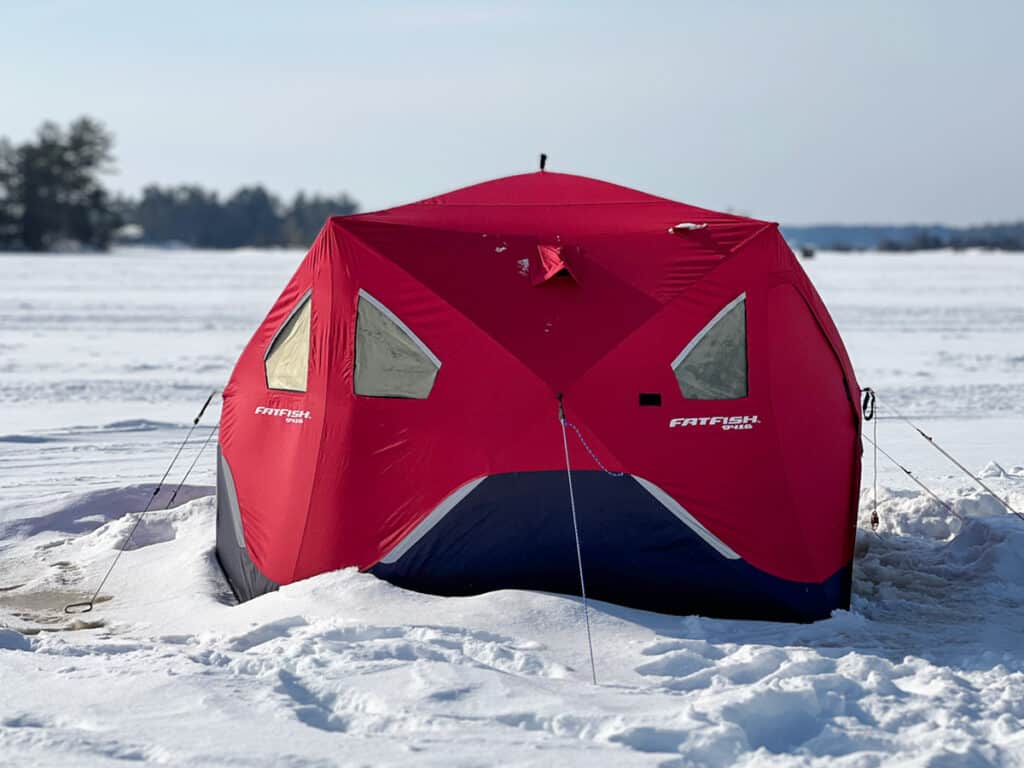
While not mandatory – more for comfort and convenience. Ice fishing shelters protect you from the icy winds, freezing rain, and of course, snow. You can opt for portable ice tents or fish houses. Before deciding which route best suits you, check your local regulations. Some provinces/states will need you to register your ice hut. If you choose this route, you should look into a portable heater to keep you warm. We swear by the Buddy from Mr. Heater – it hasn’t failed us yet.
Ice Fishing Tackle
Walk into any tackle shop, and you’ll find angler’s new to the sport picking up every lure in sight. Or a sales person talking the poor soul into lures that either don’t sell or are not for the waters you fish.
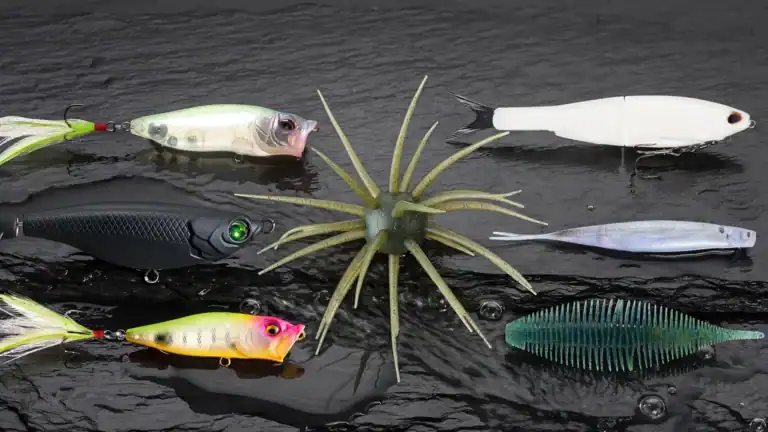
For starters, stock up on assorted hooks, swivels and an array of split shot weights. Moving onto ice fishing lures – most anglers will have an array of tungsten jigs, jigging spoons, spring bobbers, slip bobbers, and tip-ups. Having a vast range of ice fishing baits and lures enables you to target different fish species and switch up quickly if it’s not working. Also very effective in luring fish when ice fishing are swim jigs and tube jigs.
When it comes to ice fishing bait, for ice fishing beginner’s, it’s easier to start with artificial baits like worms, leeches, grubs, and maggots. You also have the choice of live bait. The best choices would be minnows, nightcrawlers, shiners, wax worms, and wigglers. Some anglers love using marshmallows or power bait for panfish. For those targeting larger fish, cut bait, salmon eggs, fathead minnows, and golden shiners are also excellent options. Don’t forget about frozen bait, which is convenient to store and use.
If you have never used live bait before, you may have a difficult time feeling light bites of larger fish. Most first-timers don’t realize that small panfish have already eaten the worm on the way down – making you sit there with an empty hook. And, yes, this was me when I first started!!!
Reminder: If you live in Ontario, we now have new fishing laws regarding the transportation of live baitfish. Be sure to check with your local regulations about live bait.
Ice Scoop
After drilling the hole, you will need an ice scoop (aka ice skimmer or ice fishing hole scoop) to remove ice shavings and ice chips from the hole. It also helps you keep the ice hole clean and prevents slush from forming, which can interfere with fishing.
Utility Sled
You don’t need a sled, but from experience, it’s a lot easier than hauling your gear in a bucket. Plus, if you’re fishing with kids, chances are they’re going to be tired and will refuse the walk back. An ice fishing sled can make transporting your gear (and kids) much more manageable.
When buying a utility sled, look for something sturdy with enough capacity to carry all your ice fishing equipment and supplies. We love the Pelican sled and can vouch that they are durable and well-made. It’s been used for hauling firewood into the garage for years, pulling the kids across the ice, and of course, ice fishing. Depending on your method of transport, the Trek Sport 75 features a tow hitch and cover, while the Trek 45 / 52 is perfect if venturing out on foot.
Ice Fishing Electronics
As a beginner angler, you probably do not have the knowledge of how to find fish, which can make ice fishing challenging. Here you have a choice, you can go with your gut feeling, ask around, or invest in electronics to help you.
Most anglers will use an ice fishing flasher, which lets you locate fish quickly when checking multiple holes. A fishfinder is great for finding schools of fish, mapping weed beds, marking waypoints, locating drop-offs, etc. Personally, I would stay away from underwater ice fishing cameras – these are super cool for seeing fish approach your lure, but are useless in murky or weedy waters.
Other Ice Fishing Equipment and Accessories to Consider
Squatting for long periods of time while wearing insulated clothing is not fun and can be painfully. Make sure you bring a five-gallon bucket that can double as a live well or a small portable hunting / camping chair. Don’t forget to bring:
- a first aid kit
- sunglasses as the snow can be blinding
- snacks and a warm beverage
- an extra pair of gloves
- extra spool of line
- fishing license
- minnow bucket for live bait
- spud bar for checking ice thickness (if your ice scoop doesn’t have a measuring bar)
- throw rope for safety
And, if you do not have a pair of good, grippy boots, consider investing in some ice cleats. If not wearing a flotation suit, wear an ice fishing bib for added warmth and protection.
Remember!
Check your local regulations about gear restrictions and limitations before you head out!
Finding the Perfect Ice Fishing Spot
As a beginner, how to find fish when ice fishing can be hard. In the winter months, fish behaviour varies greatly on the body of water, time of year, and weather conditions. Here are a few tips to help you find the best ice fishing spot:
- RESEARCH LOCAL LAKES. Many anglers are more than happy to tell you where the best ice fishing lake is, they just won’t tell you where to go on the lake. Don’t feel bad, hunters are the same! If fishing in Ontario, check out FISHON. Here you can access fishing regs, waterbody info, types of fish, etc. Online forums and fishing maps are an awesome resource for locating fish on the lake.
- LOOK FOR STRUCTURES. Fish love to huddle around underwater structures, like drop-offs, brush piles, weed beds, and submerged rock piles. Use bathymetry maps, like the Navionics Boating app to find the best ice fishing spot. Above the ice, look for islands or shorelines that extend underwater.
- CONSIDER DEPTH. Different fish species prefer different depths. For example, lake trout are often found in deeper water, while panfish like perch and bluegill love shallower areas. Experiment with drilling ice holes at various depths to find your target fish.
- WITH CAUTION, FOLLOW THE CROWD. If you see other ice anglers huddled in a particular area, it’s a good sign that the fishing is productive there. However, exercise caution and maintain a safe distance between your holes to prevent accidents.
Remember!
Ice conditions can change rapidly! Stay alert and adjust your fishing location suitably.
How To Prepare an Ice Fishing Hole
After confirming the ice is safe, warm up those muscles – it’s time to drill!
- MARK YOUR SPOT. Use a handheld GPS device or landmarks on the shore to mark the spot where you plan to drill your hole. Avoid drilling multiple holes in a small area.
- CLEAR THE SNOW. Remove any snow or slush from the surface of the ice using a shovel or an ice fishing hole scoop.
- MEASURE ICE THICKNESS. Use an ice auger to drill a small test hole. Measure the thickness of the ice at various points. Remember the safety guidelines mentioned earlier and make sure the ice is thick enough to support your weight.
- DRILL THE ICE HOLE. Once you’ve determined the ice thickness, use a power auger to drill your hole. Keep the hole diameter between 6 to 10 inches to allow easy access to fish and prevent them from escaping. The diameter will be determined by the ice auger you use.
- REMOVE ICE SHAVINGS. After drilling the hole, use an ice scoop to remove the ice shavings and create a clean and clear opening. Discard the shavings away from the hole to prevent them from obstructing your fishing area.
Here is a short video of a manual ice auger in action.
How To Catch Fish Through the Ice
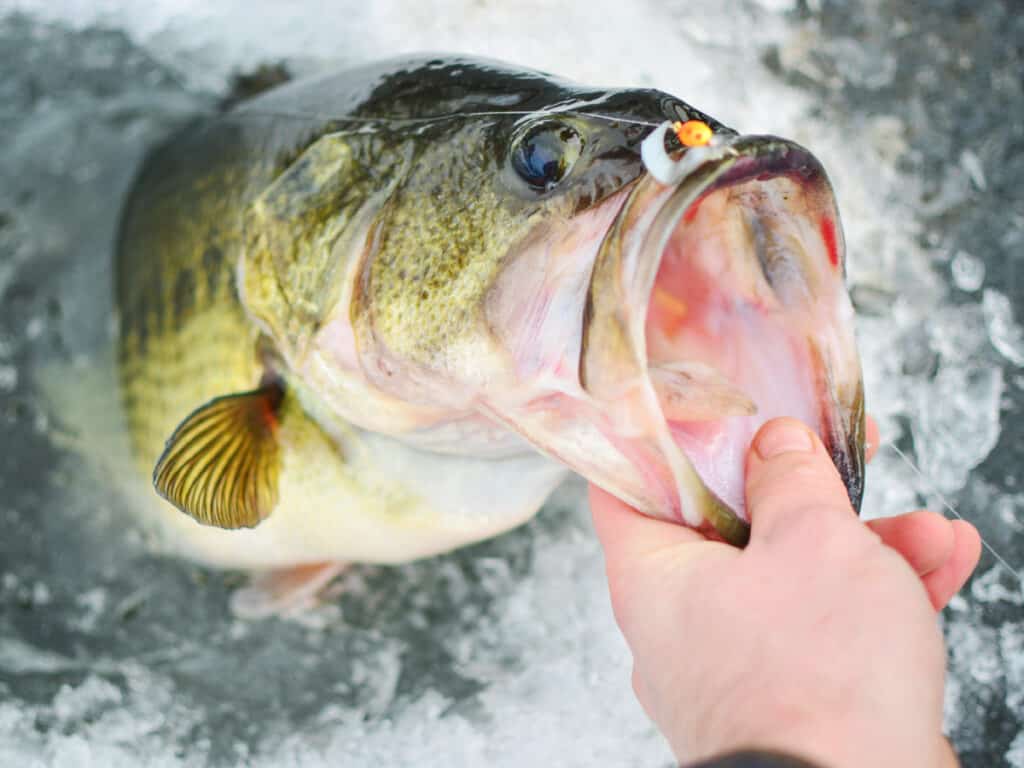
With the fishing hole set, it’s time to start ice fishing! Here are the most common ice fishing techniques that beginners can use.
- JIGGING: Jigging for ice fishing is a popular technique that involves using a jig or a lure to mimic the movement of prey. Drop your jig into the water and use short, quick motions with the jig rod to make the lure flutter up and down. This dancing motion will attract the attention of nearby fish. Ice fishing jigs come in various sizes and colours, so experiment with what works best. A popular choice is the jigging rap and swedish pimple.
- TIP-UPS: Tip-ups are simple devices that suspend a baited line beneath the ice. These devices are great for targetting larger fish such as pike or walleye. To use a tip-up, attach a baited hook or a live minnow to the line, then place it in the hole. The tip-up flag will pop up when the fish bites, indicating a potential catch.
- DEAD STICKING: Dead sticking is a technique that involves using a stationary bait presentation. Start by lowering your baited hook or lure into the water and let it sit still. This technique can be effective for finicky fish or cold water conditions when fish are less active.
A few ice fishing strategies to keep in mind:
- Adjust your depth if you’re not having much luck
- Change up your speed and rhythm when jigging
- Try different ice fishing rigs to see what works best
- Replace your bait/lure with a different colour, size, and action
Remember!
Ice fishing requires patience and persistence. Don’t be discouraged if you don’t catch fish right away. Stay focused, be adaptable, and enjoy your surroundings.
What Types of Fish Can I Expect to Catch When Ice Fishing?
This depends on the area and fishing regulations. In our fishing zone, open all year is musky, Northern pike, perch, and crappie. In other zones, you can fish for whitefish, walleye, trout, even salmon.
What is the Best Time of Day for Ice Fishing?
The best time to ice fish is at dusk and dawn. The fish are hungry and will be more susceptible to your bait.
Family Day Weekend in Ontario See what family events are close to you.
Tips for Staying Warm and Comfortable
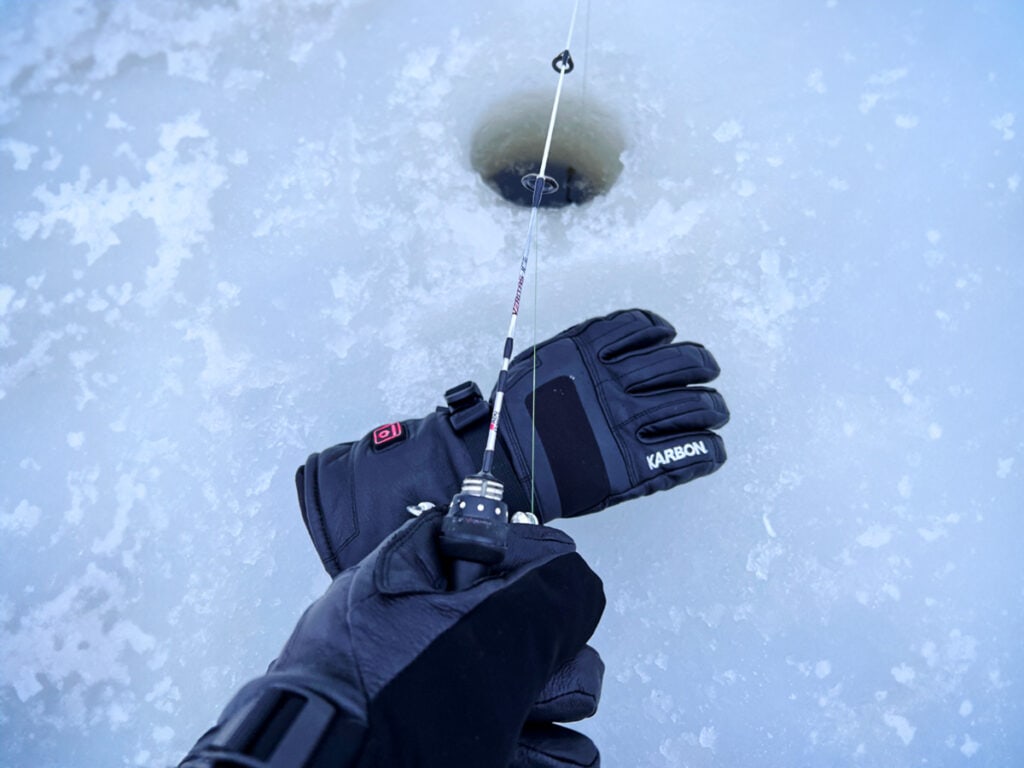
If not dressed properly, your ice fishing trip can be short lived. You will quickly realize your mistakes once you step onto that ice. Feet start to get cold and your nose gets tingly. Here are a few ice fishing tips to make sure you get the most out of your trip.
- DRESS IN LAYERS. Layering your clothing is the key to staying warm. Start with a moisture-wicking base layer to keep sweat away from your body. Add insulating layers like fleece or wool, and finish with a windproof and waterproof outer layer.
- PROTECT YOUR EXTREMITIES. Your hands, feet, and nose are the first areas susceptible to frostbite. Make sure you wear insulated gloves, thick socks, and waterproof boots. Hand and foot warmers work well for added warmth, or invest in heated gear.
- COVER YOUR FACE. Wear a balaclava to protect your face from wind and cold. Make sure to cover your nose, cheeks, and ears to prevent frostbite.
- STAY HYDRATED AND NOURISHED. Even in cold weather, you should stay hydrated. Drink plenty of warm fluids and eat high-energy snacks to keep your body fueled and warm.
- USE A HEATER. If fishing from an ice shelter, use a portable heater like the Buddy from Mr. Heater. Follow the manufacturer’s instructions and make sure proper ventilation to prevent carbon monoxide buildup.
- TAKE BREAKS INDOORS. Don’t forget to take regular breaks inside your shelter or a nearby warming hut or car if you feel cold or tired. Warm up, rehydrate, and rest before heading back out.
Ice Fishing Etiquette and Regulations
Of course, there are some basic etiquette guidelines that we should all follow. There is nothing worse than a disrespectful angler who thinks they own the ice!
- CLEAN UP. Always clean up after yourself – yes, this includes your trash and unused bait.
- MAINTAIN DISTANCE. Don’t set your fishing hole too close to someone else’s. It interferes with their fishing experience and can lead to an emergency.
- RESPECT NOISE LEVELS. Keep noise to a minimum to avoid disturbing the fish and other anglers. Loud noises and excessive movement can spook fish and make them less likely to bite.
- FOLLOW REGULATIONS. Know the local fishing regulations and adhere to them – this includes possession limits, dates, and size restrictions for the fish species that you are targeting. Respect protected areas and avoid fishing in prohibited zones. Don’t be that guy!!!
Common Mistakes Beginners Can Avoid Making When Ice Fishing
No doubt, ice fishing for beginners can be challenging. You can spend countless hours not catching a single thing. Avoid these common mistakes to increase your chances of success:
- NOT RESEARCHING THE LAKE OR FISHING THE WRONG LOCATION. Lack of research can lead to unproductive fishing trips. Take the time to gather information about the lake, such as fish species, depths, and structures. Talk to the locals or check online forums for the best fishing advice.
- OVERLOOKING SAFETY PRECAUTIONS. Safety should always be a priority when ice fishing. Neglecting safety precautions can lead to accidents and potentially life-threatening situations. Always check ice thickness, wear appropriate clothing, and never venture out alone. Remember that NO ice is ever 100% safe, so don’t skip the safety gear!
- USING THE WRONG BAIT. Fish have different feeding habits and preferences. Using the wrong ice fishing lures can result in limited success. Research the target species and choose bait that is known to attract them. Pay attention to the colour of your lure. What works in one lake doesn’t necessarily work in another.
- NOT BEING PATIENT. Ice fishing requires lots of patience and persistence. Fish may not bite immediately. Remember to stay focused and wait for the right moment. Avoid constantly moving from hole to hole in search of fish and disturbing your ice hole. Doing so will scare off potential catches.
F.A.Qs
1. What are the essential gear items for ice fishing?
To start ice fishing, you need an ice fishing rod, auger, scoop, bait, and a bucket. Optional items include a shelter, tackle, and electronics for better success.
2. How can I ensure my safety while ice fishing?
Always check ice thickness, wear appropriate gear, and never fish alone. Carry safety equipment like ice picks and inform someone of your plans.
3. What types of fish can I catch while ice fishing?
Most anglers chase after musky, Northern pike, perch, crappie, and walleye. Regulations vary, so check your local guidelines for allowable species.
4. What is the best time to go ice fishing?
The ideal times are at dawn and dusk when fish are most active and likely to bite. Patience is key, especially for first time anglers.
Conclusion to Ice Fishing Basics
Ice fishing is a fun hobby that can be enjoyed on your own or with friends. As with anything, it takes time and patience to master these new skills. Remember, not to get discouraged! With the knowledge outlined in this ice fishing 101 guide, you are well-prepared to grab your ice fishing gear, bundle up, and hook your first catch!
👉 What’s your ice fishing tip or the most frustrating part of the experience?
Share in the comments below!
Bookmark this post on Pinterest for future reference!



💯
I used to see many in the lake doing ice fishing. It must be fun.
Ice fishing is fun, it also gives you something to do and gets you out during those long winter months. 🙂
To be honest, I try to stay away from the season with ice, snow or cold. But I appreciate the fishing tips you shared. Ice Fishing seems like a fun adventure. But I will stick to the Summer season. 😆
I hear you!!! But living in Canada, if you don’t find something to do during the icy, snowy season, than winter feels super loooooong. Besides, some of these winter activities are quite fun.
What a detailed post. My son started lake fishing this past year. very informative article.
Thank you! I’m glad you found it helpful. It’s a great bonding sport and I’m sure your son is enjoying it. 🙂