Nothing like hearing your sled roar to life after a long season of sitting around. Turn the key and nothing!!! Did you forget that your precious baby needs some TLC too?!? Let’s look at a list of pre-season maintenance things I like to do with my sleds. None of which is rocket science, nor is it the be-all-end-all, but it should help keep you out of trouble. Whether you own a Polaris, Ski-Doo, Yamaha, or Arctic Cat, or any other brand for that matter, some maintenance tips will vary by brand or model. For those who maintain their sleds, your snowmobile maintenance checklist may be different, but this is what works for me. Remember: a thorough pre-season inspection is vital for optimal performance and safety!
Spread the Love
Disclosure: Posts may contain affiliate links. Purchases made through our links result in a small commission to us at no charge to you. We only recommend products that meet our brand standards based on testing and first hand use by our authors.
What Maintenance Does a Snowmobile Need?
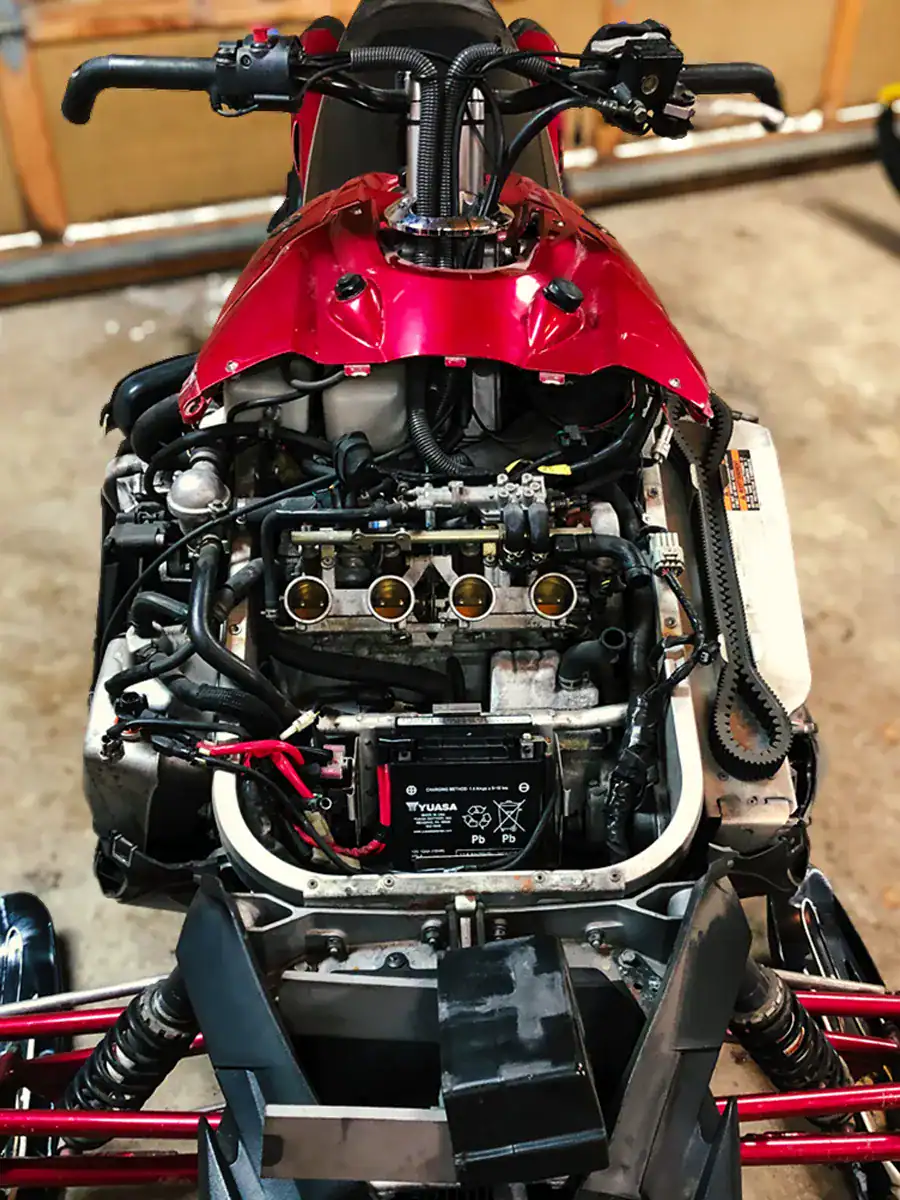
Whether you’re putting your sled away for the season or preparing it for the first ride, there are a few things we need to do to prevent breakdowns. From a quick engine tune-up, topping up fluids (or replacing), checking the track and suspension, to an electrical check, let’s break down what exactly is needed to maintain a snowmobile yourself. Come the season, finding a snowmobiling mechanic who’s free is not easy! And, if you live in an area where snow is scarce, that might mean the end of the season for you.
1. Inspect Your Snowmobile Belt, Carry a Spare
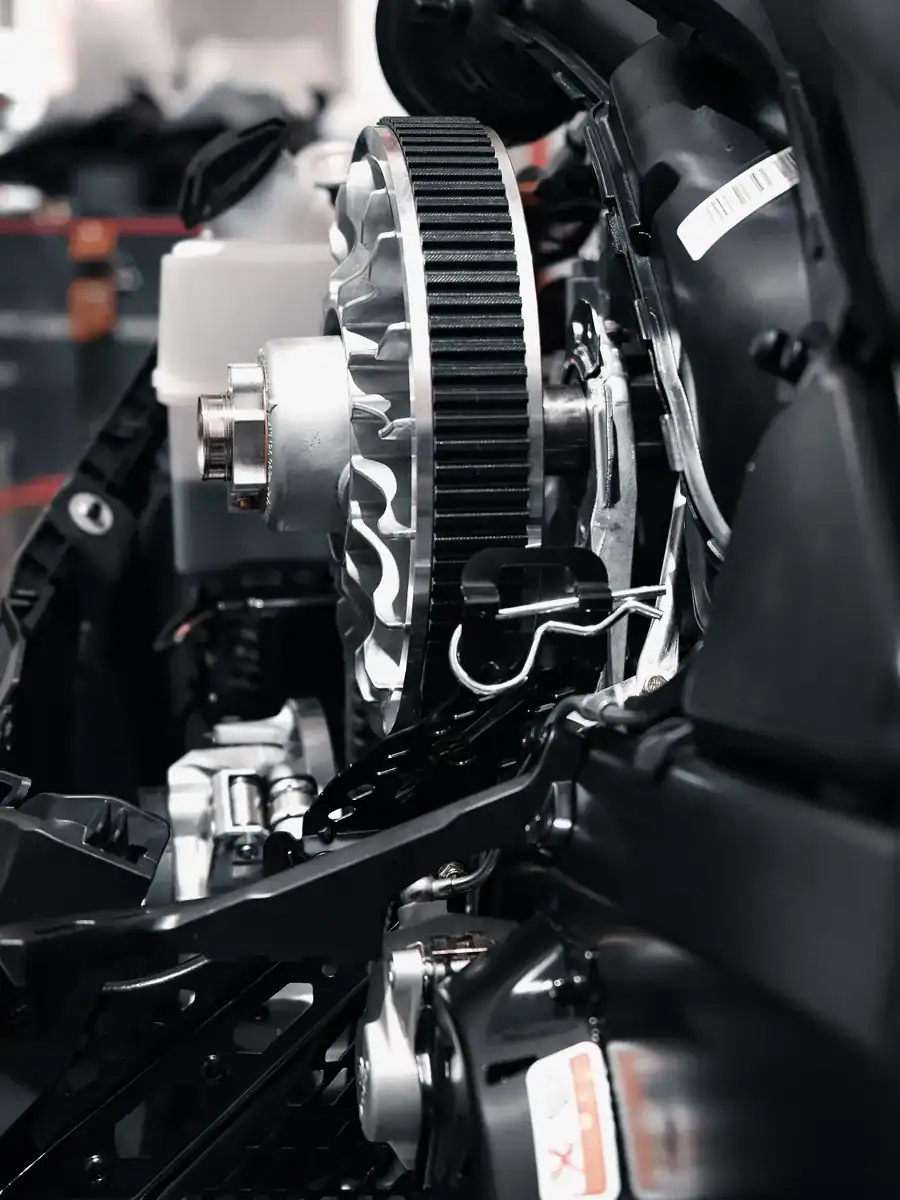
Let’s start your snowmobile servicing with a belt check. The average belt on a snowmobile lasts anywhere from 1500 to 2000 miles. Inspect the snowmobile belt for rips, cracks, tears, visible damage, and frayed edges. If in doubt, change it. When replacing the belt, purchase the correct type specific to your snowmobile’s make and model. Refer to the manufacturer’s manual or consult with a dealer for the right fit.
Most sleds have a spot to carry a spare belt; if not, pack zip ties and add it somewhere in the engine bay, away from moving parts and exhaust. Don’t forget to also carry screwdrivers, a wrench/socket set, duct tape, and a spark plug socket as a basic tool set for on-trail repairs.
If anything breaks on a snowmobile, it’s usually the drive belt. It’s not super expensive, and carrying a spare is cheap insurance to get you home. I also suggest reading the snowmobile repair manual or watching a YouTube video on how to change your sled’s belt. Save the video or take a picture with your phone to avoid physically carrying a manual.
There’s little to no cell signal in the backcountry, so don’t count on being capable of looking things up. I suggest you practice changing the belt at least once, so you’re not learning this on a cold or wet trail, in the dark, when you’re exhausted and wanting to go home. You’ll know when your drive belt is failing as it starts to whine and squeal, eventually leading to steering problems and an overheating engine.
Snowmobile Clutch Maintenance
Next, take a look at your snowmobile’s clutch. Use an air hose to blow off any belt dust, which can cause a burning smell, slipping, or vibrations. Periodically change the clutch oil. I like to do mine yearly to prevent performance issues. Not changing the oil risks blowing up the clutch and/or power transmission.
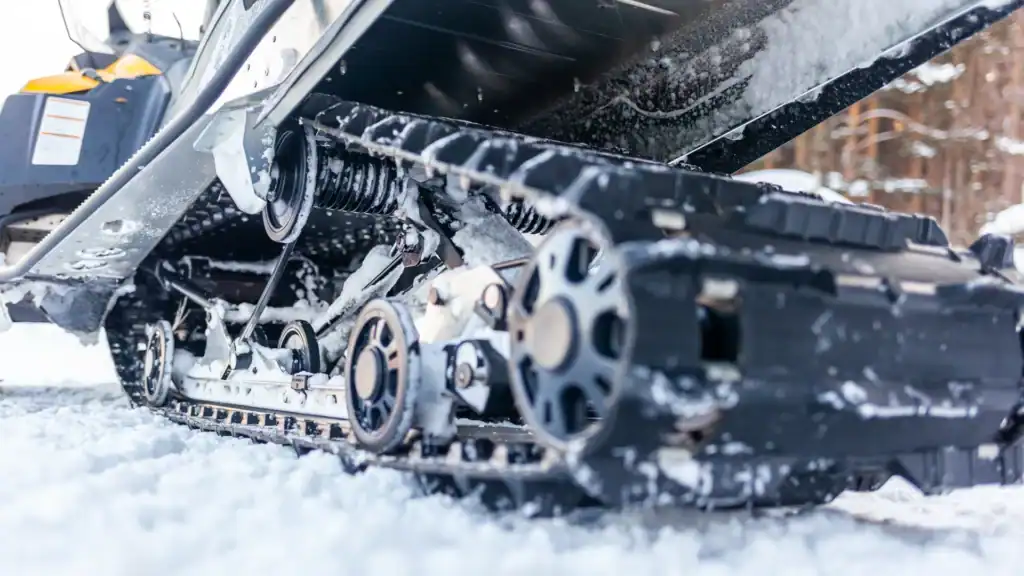
2. Inspect the Track
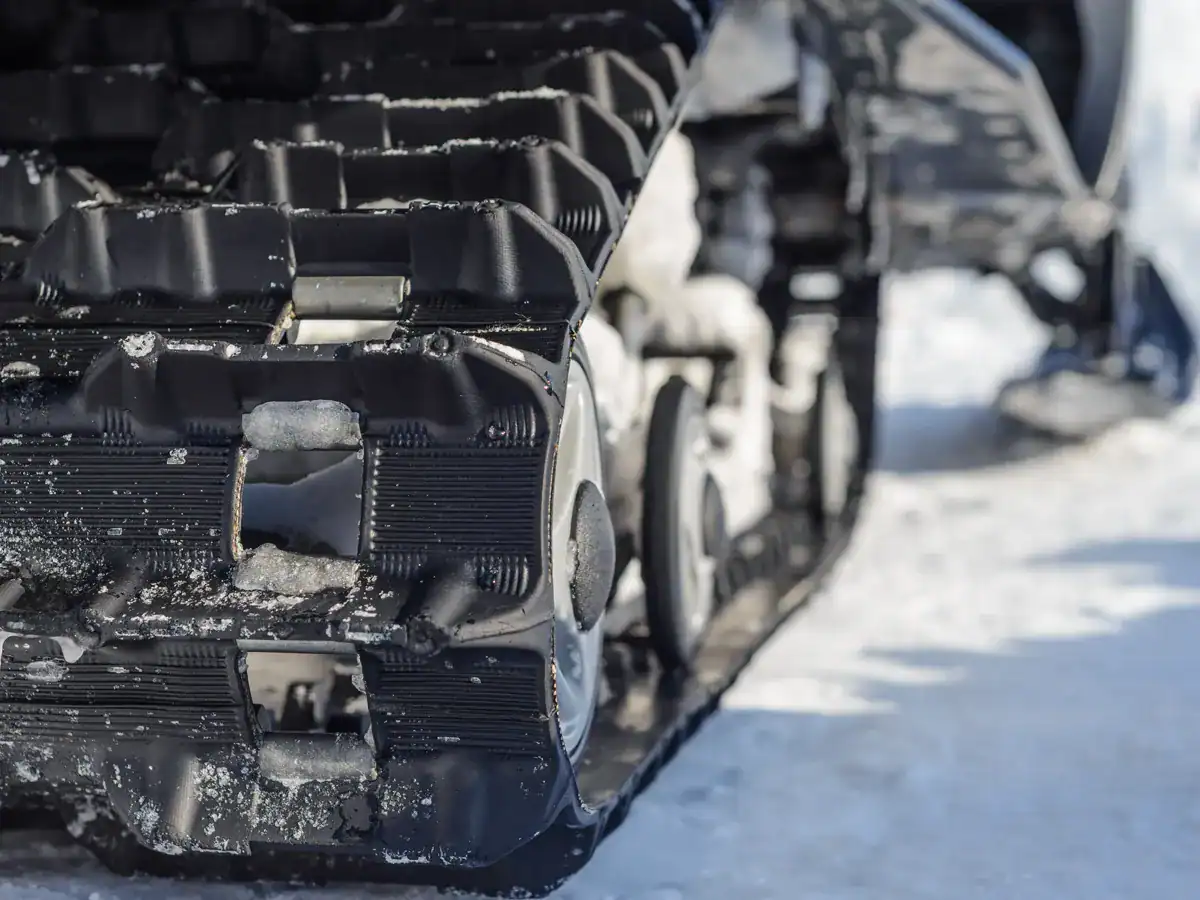
Does your snowmobile track have rips, frayed cords, cracks, and so on? If in doubt, get an opinion from a trusted friend or dealer. Mine was almost $1,000! It’s one of those items you don’t want dying in the bush, but you also don’t want to change it if you don’t need to. Don’t forget to check the snowmobile track picks! On studded tracks, check for loose or missing lugs. You can use a maintenance stand to elevate your snowmobile for a thorough inspection of the track.
For optimal performance and longevity, let’s not forget to perform a snowmobile track tension adjustment and check track alignment. Conduct a sag measurement to confirm the track is within the recommended tension range. This will help maintain the structural integrity of your suspension components and prevent further issues.
3. Change Your Fluids!
Chain Case
Every snowmobile has a chain case. The oils vary from machine to machine, so please take the time to look up what your sled needs. A good brand of chain case oil is from Amsoil. If you can’t find the manufacturer’s recommendations, contact your snowmobile brand’s service dealer or places like Royal Distributing or sled repair shops. Most snowmobile brands have their own chaincase oil.
Engine Oil
How often should snowmobile oil be changed? If your snowmobile’s a 4-stroke engine, an annual oil change is a must. If you snowmobile heavily, you’ll require extra oil changes during the season.
Modern 2-stroke engines have an oil reservoir and an oil injector. It’s not a part of “changing” fluids. Instead, treat this like a part of filling up when you get gas. Don’t be lazy either – you’ll thank me when your machine doesn’t shut down for a low oil alarm in the middle of nowhere.
Coolant
For me, a snowmobile coolant flush is done at a 4-5 year service interval. It can be corrosive for motors with aluminum parts, and it also becomes dirty over time. When I perform a coolant change, I flush and backflush everything until clear water comes through. Then, I drain and fill with the correct mixture of antifreeze and water. Do check your level and condition before the snowmobiling season and occasionally during the season to prevent engine overheating.
Brake Fluid
Check your brake fluid, if applicable. It should be full. If not, you probably have a problem that needs to be checked. I have never replaced any brake fluid in any of my vehicles – there’s no need.
My take is – it’s hydraulic fluid that contains corrosion inhibitors. Yes, it absorbs water, but it’s in a sealed system. And, technically, there’s no real exposure to moving parts that would quickly degrade or dirty it. I’m not saying it doesn’t go bad, but I would consider a change every 5-10 years. If it gives you the warm and fuzzies, feel free to do it more often – just don’t blame me if you don’t.
Routine Snowmobiling Maintenance Scheduling Tip
I work on my sleds before the season because it’s exciting. I just can’t seem to get into it in the spring. For what it’s worth, it would be better to perform fluid changes before summer storage so they sit with clean fluids.
For example, with boats, I change the lower unit oil in the fall on the day I cover the boat for storage. It has to be changed once a year anyway. My point is that I have a schedule or routine that works for me. I know what gets done and when. If you don’t have a pre-season or end-of-season snowmobile maintenance set, it’s probably wise to start now. It keeps you accountable for your maintenance efforts.
4. Check your Plugs
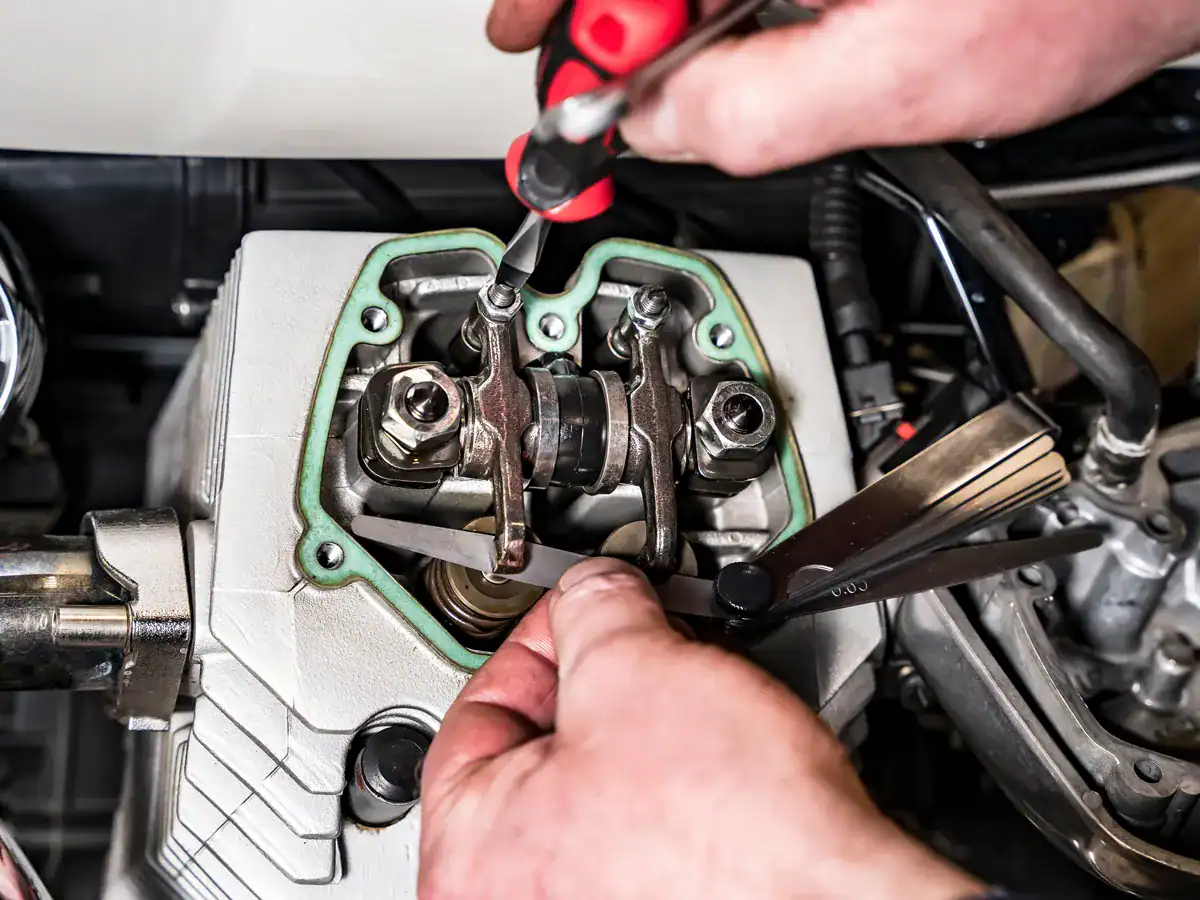
If your sled is hard to start, occasionally misfires, or doesn’t haul like it used to, it’s time to change your plugs. Don’t forget to gap them before putting them in 🙂
Before you toss the old ones, you may want to learn how to read them. Sadly, it’s a dying art, but reading your spark plugs will tell you exactly, cylinder by cylinder, what your snowmobile’s engine is doing and its health.
5. Fuel Treatment
I use premium fuel in small engines, but not for my sleds, ATVs, and boats. I don’t see the need for the added expense. Unless you have a high-compression engine that calls for it, there’s no need for it. Many people may disagree with me on this, and I respect that. But I have NEVER had a fuel-related problem.
Premium fuel doesn’t guarantee it’s ethanol-free either, which is why many people buy it. Ethanol use in premium varies from station to station, so be sure to ask or look for a sign if that’s why you are using it. I’ll tell you from experience that many gas operators can’t answer this question. A quick search will tell you that in Canada, the government is “requiring that gasoline at the pump contain an average of 5%”, provinces may up this. In the US, it’s about 10% ethanol. This includes premium!
I add some Startron to all my gas cans before filling them. The gas cans end up in my engines, so I have a system of constantly dosing and delivering a fuel system cleaner and fuel stabilizer. This way, I know the carburetor or injectors, depending on the motorized vehicle, are always getting a little cleaning. I’m also slowing down the deterioration of the gasoline and ethanol.
6. Fill Up!
Should I store my snowmobile with a full tank of gas? YES! A common problem people have is water in the fuel system. When the stator failed on the Yamaha Attak, my neighbours stopped to tell me I had water in the fuel. I’m proud to say that I’ve NEVER had that problem. And it’s because I fill up after each ride!
Most gas tanks are vented, meaning gas goes out, and air comes in. If it’s full of gas, there is no air space in your tank and no room for air, which condensates into water droplets as temperatures fluctuate. I also know that my next outing is with a full tank. The last benefit is that if there is ever an emergency, whatever machine I grab is always ready to go!
I don’t generally trust gauges either, and it’s nice to see the gas come right up when I fill.
7. Check your Battery!
For snowmobile battery maintenance, when the sled is in storage, I usually do an automatic trickle charge for a day or two, once a month. Always at the beginning of the month, not to forget. It’s not good for a battery to sit too long in a discharged state, and NEVER store it on concrete.
Before the season, check and clean your battery posts and cables to ensure good contact. Make sure they’re nice and tight.
I also have a digital load tester that will give me a percentage of battery life. It is surprisingly accurate, and I bought it as I was tired of constantly guessing the health of all these different batteries over the years. I appreciate that not everyone has this tool, but if in doubt, some shops will check your battery.
For the roughly $150 that a battery costs, it’s just not worth taking any chances of getting stranded when it reads or acts (if you can’t measure) a bit weak. The Ski-Doo I have has a pull start, but it will not run without a battery! I’m not sure, but it might be an issue with the digital security key. Nevertheless, don’t count on the pull start alone.
8. Don’t Forget Your Lights
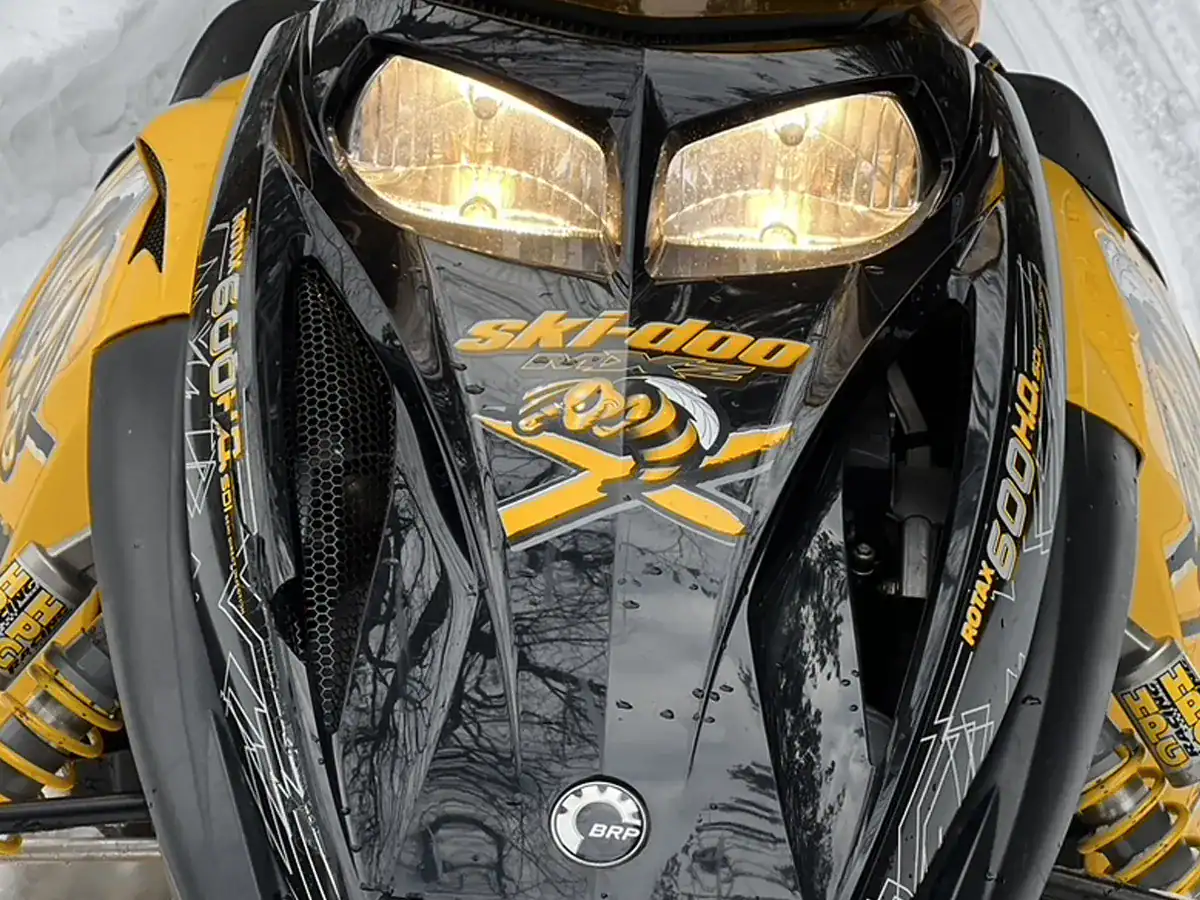
A brake light is a safety feature – make sure it works. As for a headlight, you won’t be riding at night without one, so double-check it. This should be part of your regular snowmobile maintenance. I also suggest checking it before any trip that potentially has you coming home in the dark.
9. Grease and Lubricate
Don’t forget to lubricate all grease fittings and suspension pivot points. This preventative snowmobile maintenance step will help ensure smooth operation and extend the life of your suspension components. Regular greasing can prevent premature wear and potential performance issues down the line.
10. Cable Adjustments
Lastly, before your first ride of the season, check to see if your snowmobile needs a brake adjustment. If so, no worries, it’s a quick fix – use the barrel nut to remove the free play in the brake lever. Depending on the type of sled, the nut can be found by the handlebar or caliper. Again, look for damage to the housing, kinks, or frays. Replace it if you do find any damage. The same goes for the throttle cable. Failing to adjust a loose throttle equals lost power! Not enough slack (2 to 3 mm) makes for a sticky throttle.
Common Snowmobile Issues FAQ’s
Usually, there are four main reasons that a snowmobile won’t start. First check for spark, followed by compression, fuel (ensure the carb is getting fuel), and lastly, make sure there’s air coming out of the exhaust.
A sled will overheat if it sits idle. Other causes to check is a dead water pump or an airlock, faulty wiring, a clogged exhaust pipe, a stuck thermostat, low coolant levels, or no snow on the heat exchangers.
There could be so many reasons why a sled vibrates. The easiest thing to check is the belts and track. From there, inspect the brake rotor, and double-check if your driveshaft/jackshaft is bent. The only other thing that can cause vibrations is bad bearings.
👉 What do you do differently to maintain your snowmobile? Comment your DIY snowmobile maintenance tips below.
Bookmark this post on Pinterest for future reference!