

Fishing is such an integral activity in our family. Not only is it relaxing, but it’s also thrilling to land the BIG ONE and exaggerate your catch to the anglers around you. But, there are days where no matter what you throw, nothing happens. You don’t even get a bite from the smallest of fish. Even after changing your lure, rod and spots a half dozen times. Most successful anglers are familiar with various tactics and techniques. They know when to play. They also know when to take the day to clean their reels or dust off their prized trophy fish from 20 years ago. Knowing what resources are needed is half the battle. The other… BEHAVIOUR – not yours, the fish’s! For example, spawning, habitat, feeding and environment all play major roles in the success of your fishing trip. Once you understand a crappie’s behaviour, gauging the best time for crappie fishing will be easy.
This post is designed to help beginner crappie anglers understand the Crappie fish species. It gives insight into the crappie spawning season, prime fishing times for crappie, location, tackle, techniques, and required gear to fish for crappie.
Spread the Love
Disclosure: Posts may contain affiliate links. Purchases made through our links result in a small commission to us at no charge to you. We only recommend products that meet our brand standards based on testing and first hand use by our authors.
How Crappie Behave During the Best Time for Crappie Fishing
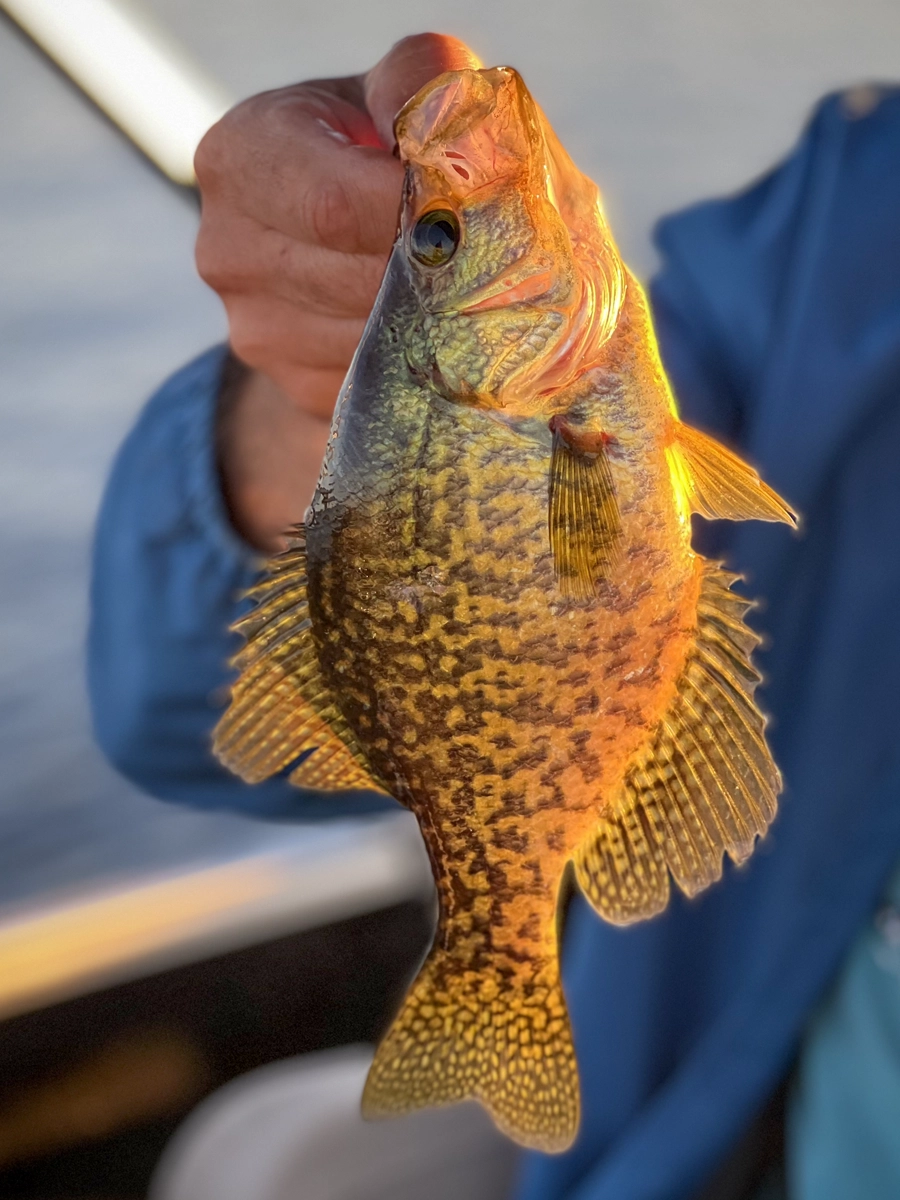
Seasoned Crappie anglers know that crappie fishing is one of the most exhilarating experiences. Whether large or small, these fish are feisty. It is one of the reasons that children love fishing for crappie. There is nothing sweeter than watching my son and his pro fishing buddy getting ready and counting down to the bite.
Crappies are known to be highly active during specific periods, which vary depending on the time of year and environmental factors. Crappie fishing spots are anything structural – this species loves stumps, fallen trees, rocky areas, stake beds, weed lines, submerged vegetation, cattails and shorelines. They are often found near brush piles, bridge piers, and standing timber, which all give natural cover for these fish.
Spring – Crappie Spawning Season
Crappie spawn time is early spring. Fishing in the spring is during the pre-spawn period, when the water reaches the high 50s, the crappie follows bait fish towards shallower water to feed and spawn.
During the crappie spring spawn, they move into schools and spawn in beds 2 to 8 feet deep over sand or gravel bottoms. These spawning grounds and spawning beds become the best locations and time of year for crappie fishing for seasoned anglers and beginning crappie fishermen to target them. As the water temperature rises, they become more aggressive as they search for food in shallow water and shallow cover.
Summer – Not So Energetic
Once into the summer months, crappie behaviour changes. They are more spread out in open water and tend to move to deeper, cooler waters to escape the heat. Crappies become less energetic during the day. Early morning and late evening are the best times to crappie fish during the summer months. In summer, crappies often congregate near the thermocline, where there’s a sudden change in water temperature.
Fall – Feeding Frenzy
During the fall crappie fishing season, expect the behaviour to be akin to spring fishing. Big schools of crappie move back towards shallower waters in preparation for winter.
As the water temperature drops, they become aggressive. Their feeding activity increases, making this another best time to crappie fish in the fall. It’s also the time of year when you can expect to catch larger crappie. Look for them in 6 to 14 ft of water. They are often near submerged timber or woody debris.
Winter – Chilling Out
As in the summer, during the winter, the crappie are more spread out. They are found in deeper water of 10 to 35 feet. In these months, they are not aggressively searching for food.
What Affects Crappie Activity
As with any fish, environmental factors play a huge role in crappie fishing success and how crappie responds to your bait.
- For one, water temperature. It is one of the most crucial factors to consider when targeting crappie. These fish are most active when the water temperature ranges between 55°F and 70°F. If the water temperature falls below or exceeds this range, crappie becomes less active and harder to catch. It would be in your interest to use a thermometer or your fish finder to check the water temperature and adjust your fishing approach accordingly.
- Water clarity also plays a role in crappie activity. Crappies tend to prefer clear water, where spotting prey is much easier, but they’re also more cautious. In murky or muddy water, crappie tends to be less active and more difficult to locate. In such cases, using brightly coloured crappie lures or baits that create vibrations can help attract their attention.
- The presence of structure is another vital factor when finding crappie hotspots. Crappies are notorious for seeking cover and hiding near structures like submerged vegetation, fallen trees, or brush piles. These structures give them ambush points and attract smaller baitfish, making them ideal feeding grounds. Use a fish finder or study maps to find potential hotspots and focus your efforts on those areas.
Pro Tip
The clearer the water, the deeper the fish will be.
What is the Best Time of Day to Crappie Fish?

The short answer: crappie bite best in early morning (dawn) and late evening (dusk) – a roughly two-hour window at each end of the day. Here’s why, and how to maximize both windows:
Technically, you can fish for crappie whenever you want to, but I can’t guarantee that you will be successful. The best time of day for crappie fishing is determined by weather and time of year.
Prime fishing times for crappie are early mornings and late evenings, which is usually a two-hour window.
In the summer months, you’ll be rewarded with a third opportunity. The best time of day to fish for crappie will be at night. During these periods, crappie are more active and actively feeding. The low light conditions make them more comfortable and less wary, increasing your chances of success. The cooler temperatures also contribute to their activity level and willingness to bite.
Overcast or cloudy day crappie fishing is another best time to catch crappie. The reduced sunlight make crappies feel more secure and encourages them to venture out of their hiding spots. They are also more likely to be found near structures or shallower waters.
Bright and sunny days can make crappies more skittish and less likely to bite. If you are fishing during these conditions, focus on shaded areas. Try targeting deeper waters where crappie might seek relief from the heat.
Crappie feed more actively during periods of low barometric pressure. This often occurs before a storm or change in weather conditions. Choppy water also helps with their activity level.
The moon also plays a crucial role in when crappies bite. I find that fishing during a full or new moon works like magic.
Pro Tip
Pay attention to signs of activity, such as jumping baitfish, birds diving into the water, or ripples on the surface. These are good indicators of feeding crappies, which can lead you to productive fishing spots.
Best Locations for Crappie Fishing
Every body of water is different, and with practice, you will begin to recognize the signs of finding the best crappie fishing locations. For instance, I love bass fishing and walleye fishing more than crappie, and as I fish our favourite spots, just before the sun starts to set, you can see rings and ripples appear on the water’s surface. That there is a sign that crappie is actively feeding.
As you watch the ripples, over time you see that they move in a certain direction and pace. Keep coming back to that location for the next few days, and if the activity level is the same, congratulations, you’ve found yourself a crappie hotspot!
While you are learning to recognize the signs, for lake crappie fishing, start your search at the mouth of a bay or near creek channels. Look for areas with natural cover like submerged brush, steep banks, or pea gravel banks. Don’t forget, the main lake can be very productive in the summer and winter months.
Crappie Fishing in Ontario
If fishing for Black crappies, they can be found throughout the southern part of Ontario as well as parts of Northern Ontario, where the water is clear, warm and with lots of vegetation.
White crappies, on the other hand, are typically found in weedy, sheltered bays in Southern Ontario. In the US, they are pretty much everywhere.
Pro Tip
Stay mobile! If you’re not getting bites in a particular spot, don’t be afraid to move around and explore new areas. Crappies can be highly mobile, and their feeding patterns can change throughout the day. Keep moving until you find an active school of crappies. Don’t forget to look for the signs.
Techniques for Catching Crappie

Once equipped with the right fishing gear, you will need to learn and master some different tactics for catching crappie. Here are some crappie fishing techniques that have proven effective in helping you catch crappie on your next fishing trip.
1. Vertical Jigging
Easily one of the most popular techniques for crappie fishing. Cast your line into the water column and retrieve it with small, subtle movements. Crappies are attracted to erratic behaviour and often strike when the jig is paused or falling.
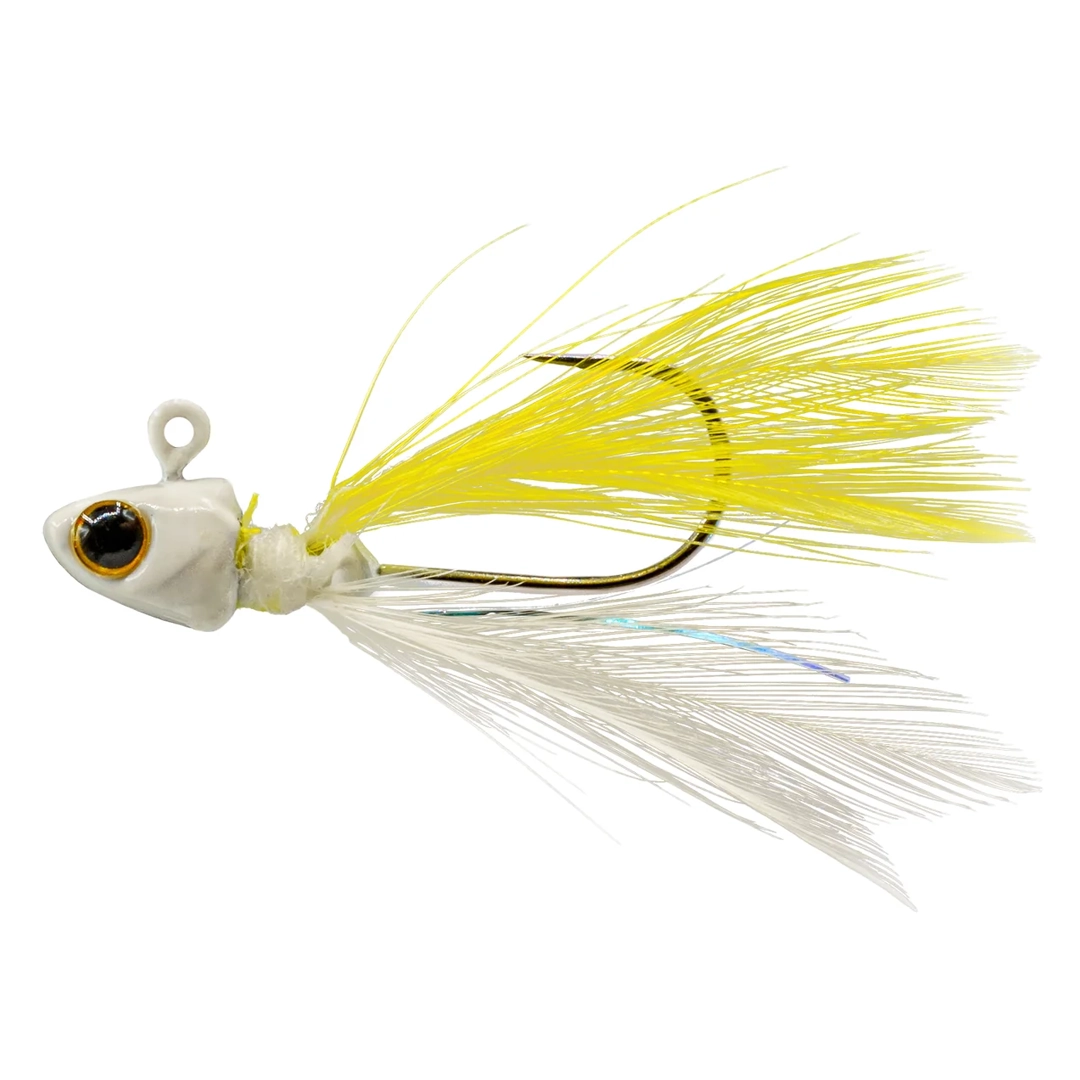
Crappie slamming the Pluck Hair Jig - why aren't you? The 6th Sense Fishing Pluck Hair Jig is exactly what you need. Weighing in at just 1/8 oz., this jig features eye-catching chartreuse minnow colors with a stunning mix of white and yellow feathers that perfectly mimic baitfish. Plus, the sharp hook ensures your catch stays on the line. Trust me, this jig will have the fish practically jumping into your boat!
2. Casting and Retrieving
Casting and retrieving small crappie jigs or soft plastic baits can also be effective, especially when targeting crappies near structures or along drop-offs. Cast your lure near the structure and retrieve it slowly, varying the speed and depth until you find what works best. Use this cast and retrieve method when fishing near brush piles or standing timber.
3. Slip Bobber Fishing
Using a slip bobber allows you to suspend your crappie bait at a specific depth, keeping it in the strike zone longer. Attach a small bobber stop above your hook, adjust the depth, and cast your bait near structures or along weed lines. Crappies are known to be attracted to stationary baits suspended just above their heads.
4. Trolling
If you’re fishing from a boat, trolling is a great way to cover a larger area and locate scattered crappies in open water or active schools of crappies, especially in the summer. Use small jigs or 2 to 3-inch panfish crankbaits and zigzag at a slow speed of 1 to 2 mph, varying your depth until you get bites.
5. Live Bait Fishing
Crappies are known to be voracious feeders, and using live bait can be highly effective. Hook a live minnow, wax worms, or fathead minnows through the lips or thread it onto a small jig head. Allow the bait to swim naturally or use subtle movements to entice a strike.
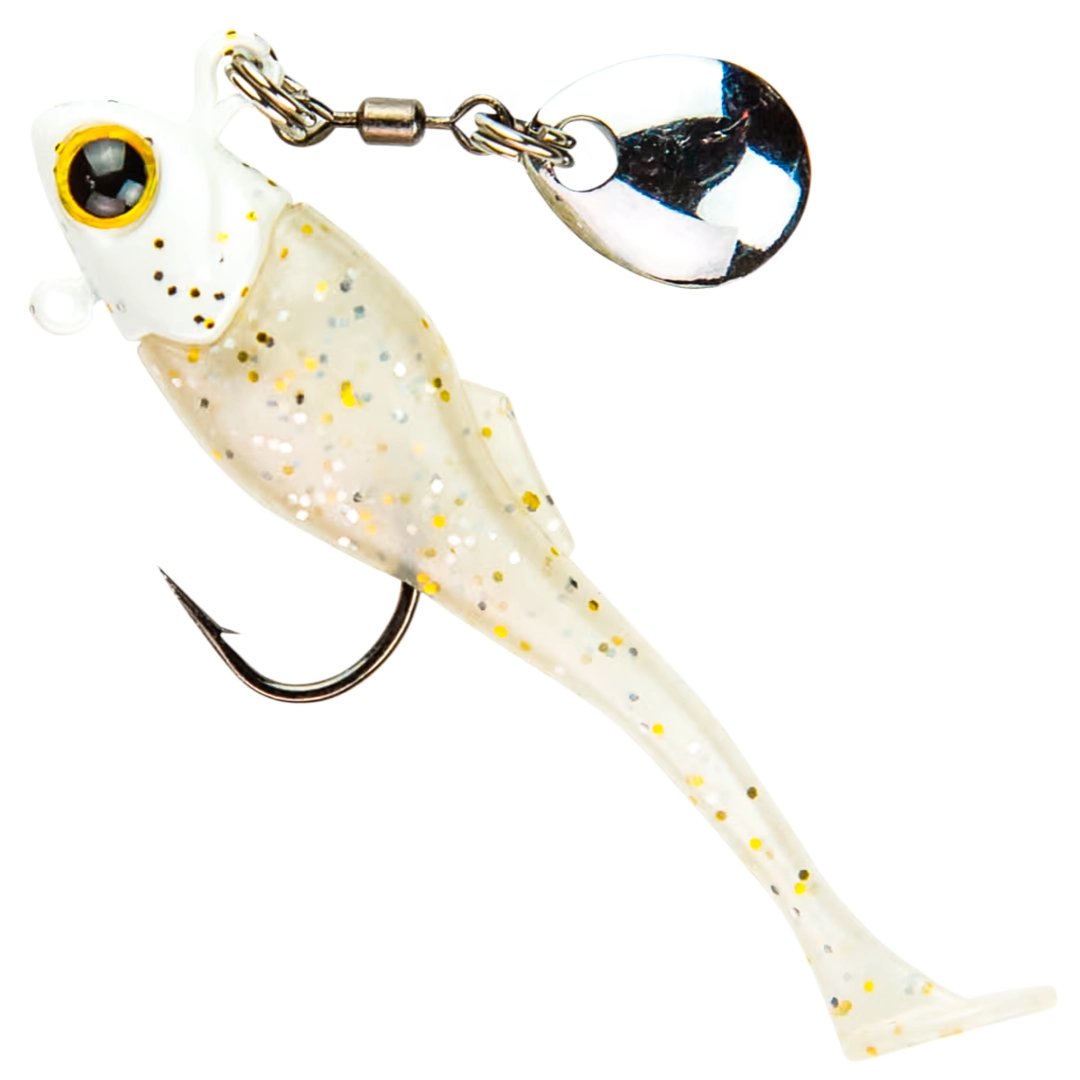
Can't catch crappie slabs? Pecos Underspin changes that quick. This isn't just any jig: it's designed in platinum white that is irresistible to crappies! With its realistic 3D eyes it adds that extra touch of realism that can make all the difference. Not to mention, the sharp hook is ready to snag those big catches when they come your way. Plus, the 6th Sense Fishing Pecos Underspin Jig comes with 5 Pecos Swimbaits, giving you everything you need to bring in a solid catch!
How To Fish For Crappie – Seasonal Techniques

Spring Crappie Fishing
The best month for fishing crappie is when your body of water’s temperature is between 65 – 72°F. In most cases this would be May, June and early fall, sometimes April if you’re a further south. Most crappie anglers will target these fish at depths of 4 to 14 feet of water. During spring, focus on shallow water and shallow cover where crappies are likely to spawn.
Winter Crappie Fishing
Since they are not aggressively searching for food, the best crappie ice fishing method during the winter months is to use a slow vertical jigging technique with a live minnow. You will have to let the bait hang for a little longer to entice the crappie to make a play for it.
Summer Crappie Fishing
In the summer, when the crappies are more spread out, trolling with a crankbait is your best bet to finding them, or if you have a fish finder, look for 10 to 35-foot water columns and throw a jig into it. Remember to consider the thermocline, as crappies often congregate near this layer of cooler water.
Crappie Fishing Regulations and Limits in Ontario
I can only speak to Ontario, where crappie fishing is open all year. Keep in mind that your possession limits will vary based on the type of fishing license that you have. For Sport Fishing license holders, your possession limit is 30. For those with a Conservation license, your limit is 10.
If you live outside Ontario, please check with your local fishing authorities, province or state, as your regulations or restrictions may differ.
Essential Gear for Crappie Fishing
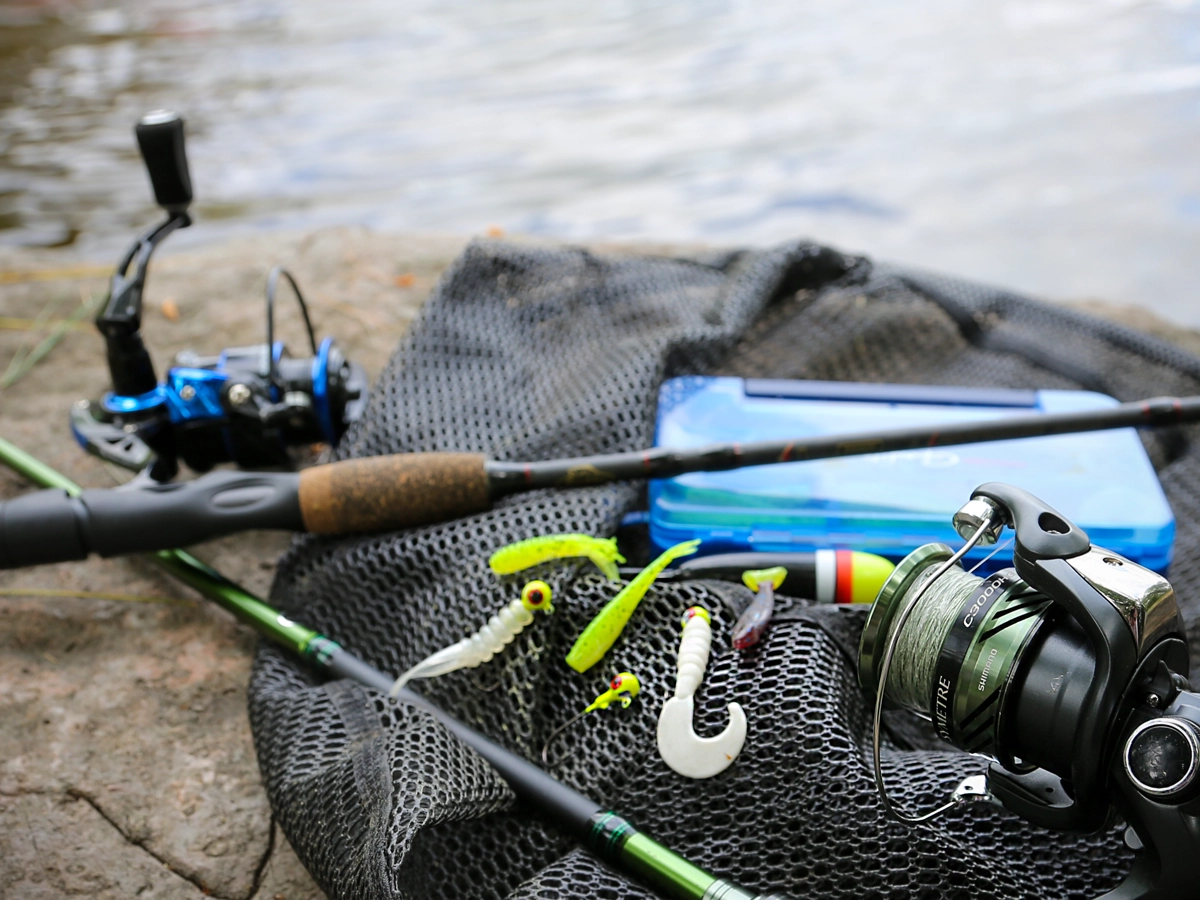
If you are new to crappie fishing and would like to try your hand, the gear you require is minimal and does not need to be expensive.
The only thing to remember is to keep your gear ultralight! Crappies have small mouths and are small in size unless you catch yourself a monster crappie. Here is a list of the needed fishing gear for crappie.
1. Fishing Rod and Reel
Your crappie fishing rods and reel should be a lightweight spinning rod and reel combo. The rod tip should be sensitive enough to detect subtle bites but also have enough backbone to handle larger crappies. A 7 – 8 foot, medium-fast action rod with a 500 to 1000 reel size is ideal.
2. Fishing Line
Opt for a lightweight fluorocarbon or monofilament line with a test strength between 4 – 8 pounds.
3. Hooks and Bobbers
Use a #4 or #6 fishing hook to accommodate the small mouths of crappies. For beginners, I suggest attaching a small bobber to help detect bites and keep your bait at the desired depth. You might also want to add a split shot to your line for added weight and control.
4. Best Crappie Bait and Lures
Light tackle is best used for fishing crappies. Opt for small jigs, panfish baits, soft plastic baits, spinners, and live minnows or worms. Experiment with different colours and sizes to see what the crappies are biting on in your area. For us, we found the best crappie bait to be jigs. The best jigs for crappie fishing to be a 1/16 oz yellow or white ball head crappie jig with a white or yellow tail. You can also try tube jigs, hair jigs, and even a beetle spin for variety.
5. Tackle Box
Invest in a tackle box like the Plano Edge to keep your gear organized and easily accessible. Carry a variety of jigs, soft plastics, hooks, and weights to cover different fishing scenarios and for quick replacement should you lose a hook to cover or a soft plastic to the crappie.
FURTHER READING:
Heading somewhere remote? Check out our DIY survival fishing tin – a compact emergency kit that fits in your pack.
6. Polarized Sunglasses
Although not a necessity, polarized sunglasses do help reduce glare and allow you to see beneath the water’s surface, making it easier to spot submerged structures or schools of crappie.
Crappie Fishing Guide for Beginners
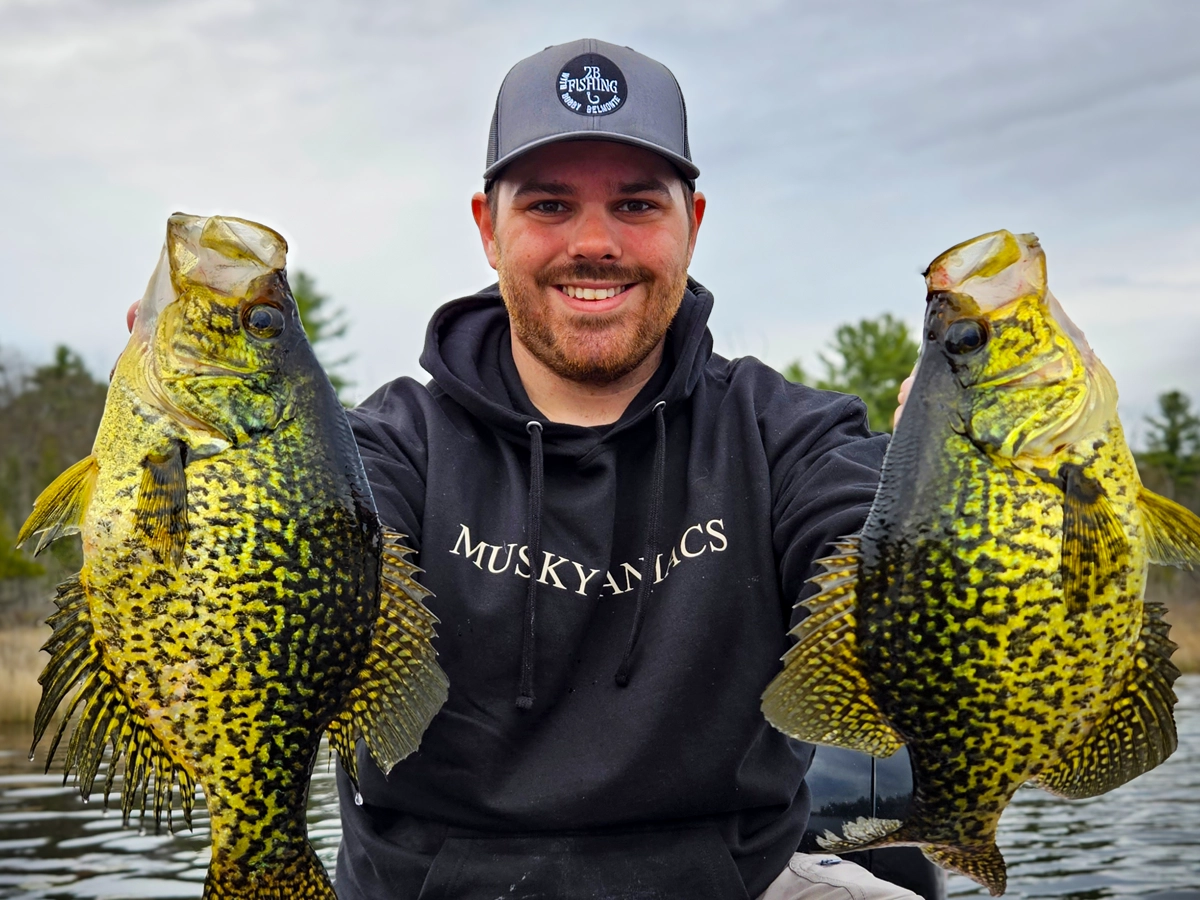
If you’re dreaming of reeling in a monster crappie on your next crappie fishing trip, consider hiring an expert crappie guide to show you the ropes during the best time to fish for crappie.
A fantastic crappie fishing guide in Ontario is Bobby Belmonte.
Whether you’re a beginner angler or a seasoned pro, Bobby Belmonte from 2B Fishing offers the perfect experience in the Peterborough area, just 2 hours northeast of Toronto. You’ll be casting into the waters of the Kawartha Lakes to learn how to catch crappie, new techniques and crappie fishing tips to enhance your fishing game.
Bobby offers over 15 years of experience and offers flexible scheduling options. Don’t worry about bringing your gear, as 2B Fishing will supply the rods and tackle! All you have to bring is yourself, maybe a buddy and your license. Be prepared to be led into the biggest catches of your life! You can book your outing with Bobby here.
FAQs: Crappie Fishing Questions
1. What is the best time of year to fish for crappie?
The best time of year to fish for crappie is during the spring when they spawn. Crappies move to shallower waters and become more aggressive, making them easier to catch.
2. What time of day is best for crappie fishing?
The best time of day to catch crappie are early mornings (dawn) and late evenings (dusk). This is usually a two-hour window.
3. What are the best techniques for catching crappie?
Powerful techniques include vertical jigging, casting and retrieving, slip bobber fishing, trolling, and using live bait. Each method works well in different conditions and water depths.
4. What gear is needed for crappie fishing?
To fish for crappie you need a lightweight spinning rod and reel combo. A 4-8 lb line, small hooks and bobbers, various jigs and lures. Not necessary, but consider wearing polarized glasses to reduce the glare and spot fish.
5. How does weather affect crappie fishing?
Weather impacts crappie activity; they are more active during low light conditions like early morning, late evening, or overcast days. High barometric pressure and bright sunlight can make them less likely to bite.
Bottom Line: When to Go and What to Bring
Spring spawn is your golden window – water between 65 – 72°F, shallow cover, and crappie actively feeding. If you miss spring, early morning and evening sessions in summer and fall will still put fish in the boat. Watch the moon. Fish before a storm. Stay mobile until you find the school.
For Ontario anglers – the Kawartha Lakes during spawn season is as good as it gets. If you want to shortcut the learning curve, Bobby Belmonte at 2B Fishing is the real deal.
Gear-wise – keep it ultralight, go yellow or white jigs first, and don’t overthink it. Crappie fishing is supposed to be fun.
More Fishing Content From BushLife:
- Fishing for Kids: get the next generation hooked
- Ice Fishing 101: crappie don’t stop in winter
- Fishing Reel Guide: the right reel makes all the difference
- DIY Survival Fishing Tin: never be without a backup plan
👉 What’s your favourite time of day to fish for crappie? Share your experiences and tips in the comments below!
Bookmark this post on Pinterest for future reference!




I have to share this with my cousin who loves to fish and take fishing trips!
Charters always make fishing much more enjoyable, especially in new bodies of water. Thank you for your comment and for sharing my post – it is greatly appreciated.
This is such a handy guide! I’ve only been fishing a couple of times, I didn’t realize how much there is to it and how the seasons affect everything. Thank you for sharing!
Awe, thank you!! Yes, there are so many factors that need to work together to make fishing a success. Even something as simple as the wind direction can make or break a fishing trip. It’s worth giving fishing another chance!
I enjoyed reading this and looking at the fish photos. Thanks for sharing.
Thank you. I appreciate your comment.
Excellent post! I have an apartment in a fishing village just out of Melbourne (Australia). I would like to move back there when I retire and partake in some fishing. I know nothing about fishing but used to see the kids and adults fishing from the jetty near my home. Thanks for sharing.
That sounds like a wonderful plan! Fishing is so relaxing, not so fun when they’re not biting, but at least it comes with a beautiful scenery. It doesn’t take much to get started, just focus on technique, timing and using the correct lures. Most importantly, have fun doing it!! 🙂
My husband would absolutely love crappie fishing! Thank you for sharing your expertise!
Happy to hear that you found the post useful. Wishing hubby all the best out there!
Thank you for sharing your tips! I really enjoyed your article!
Thank you for reading it and for your comment.!!
Such an interesting read. Learnt so much, thank you!
Thank you so much. Happy to hear that the post was helpful.