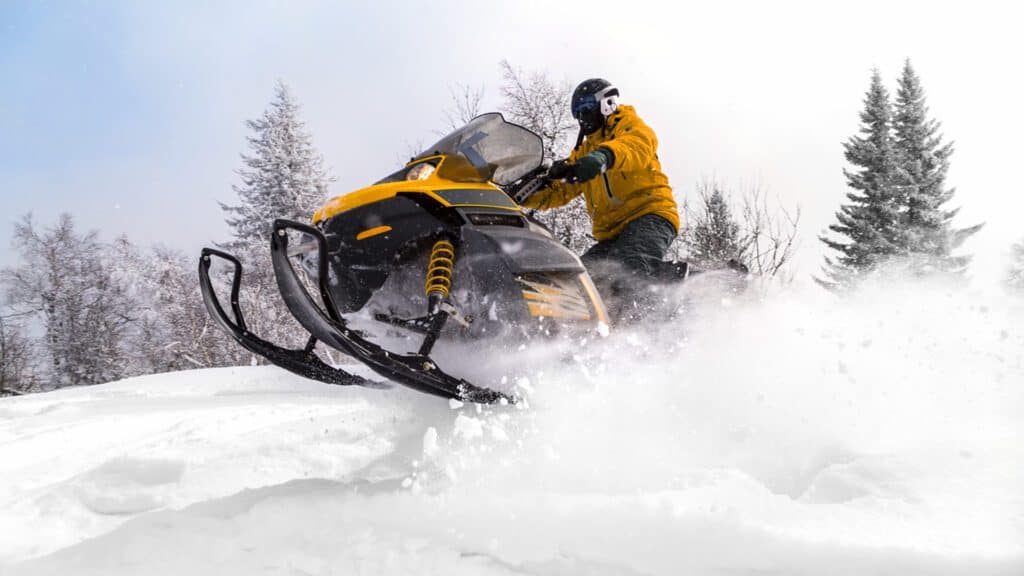
Winters here! After a big storm in Ontario, there’s a nice thick layer of frozen white water called snow. That means it’s time to whip out the sled. That is, of course, if you have one. In this Introduction to Snowmobiling, we’ll guide you through the basics: buying a snowmobile, understanding what gear to carry with you when snowmobiling, and learning what to do if your sled breaks down in the backcountry. We’ll also discuss important winter safety tips and gear, as well as beginner riding tips.
At the end of this post, there’s a link to download a free Snowmobile Survival and Breakdown Checklist printable, no questions asked.
Spread the Love
Disclosure: Posts may contain affiliate links. Purchases made through our links result in a small commission to us at no charge to you. We only recommend products that meet our brand standards based on testing and first hand use by our authors.
My First Time Snowmobiling
My first time on a snowmobile was around 12 years ago. A corporate job took me to Whistler, British Columbia, for a commercial real estate convention. My realtor had secretly booked us for a day in the mountains on a guided snowmobiling tour. The trip just got a lot more exciting as the pleasure box of the checklist got ticked.
We were shuttled to a little off-grid log cabin halfway up the mountain, where we suited up in snowmobile suits and other riding apparel to go sledding. After a quick gear up, we hit the powder halfway up those very high mountains. This new adventure had spectacular scenery for our first snowmobiling journey!
Our snowmobiling tour guide was quick to analyze our ability, and even though we were beginner snowmobilers, he was confident enough in what he saw to take us on the “challenging” snowmobiling trails. The adrenaline rush was unbelievable! It was a day I would never forget, as it was one of the funnest days I have ever had. It was also an eye-opener as we quickly realized that driving a sled is not complicated.
Heads Up: It’s a Short Snowmobiling Season
I figured the best way to start Introduction to Snowmobiling is with a stark warning. It’s a very short sledding season unless you live way up north.
Fast forward to 2018, and I bought myself a snowmobile to go with our newly acquired cottage. The lake froze by mid-October and was thick enough to ride on by mid-December. That was an amazing year – the lake was safely frozen solid until late March, providing a full 3 months. We also had a ton of snow that winter season.
In recent years, the lake was sled-friendly in mid-January. It also seems to have a cutoff at some point in March, which provides a season of 2 to 2.5 months!
If you’re new to snowmobiling, snowmobile trails have a lot of water crossings. These trails become very disjointed when those crossings are no longer safe. To complicate matters, the trails themselves need a thick layer of snow. On repeat, the snow must accumulate and pack to create a solid base for sleds. This process makes for smoother rideable trails.
To ensure a safe ride, check if a trail is open and safe to use before going out. Beginners should look for trail condition updates from local snowmobile clubs or state/provincial snowmobile associations, which often provide real-time updates and safety recommendations through their websites or social media channels.
Last year, for example, the snow conditions on the lake were still satisfactory. It was the snow melt on the trails that ended the season! In low snow conditions, proper snowmobile trail maintenance is crucial.
Backcountry Snowmobiling Video
Below is a short video showing a backcountry river at the beginning of February. While not deep, it’s one of those pretty rivers that never freezes. We’ll discuss ice safety further below, but remember that water bodies range from wide open to frozen solid.
A Short Snowmobiling Season Means Two Big Considerations
Cost vs Return
If snowmobiling is your main or only hobby, or you are blessed with cash, by all means, spend the money and go nuts on that shiny new sled. For those on a budget, borrow or rent a snowmobile to get a taste of the sport before making a huge investment.
Failing that, I suggest buying something reliable but affordable so you can enjoy other outdoor activities. Instead of making payments in June on a sled, when you should be out on a boat.
Sorry to the hardcore sledders, but my ATV runs 365 days a year. It even plows my driveway or winches things, which is called “work”, so naturally, that’s where I dumped the bulk of my toy budget.
Getting back to sleds, when it’s minus 20 outside, and you are 40 km out in the bush, you don’t want your sled to break down on you either. Other than replacing a belt, which is routine maintenance, my sled has never let me down. That’s not bad, considering the sled was only $4,000. I am talking about pre-COVID pricing.
A bit bigger budget, to the tune of $6,000-$8,000, opens the doors to nicer sleds than mine! For someone new to the snowmobiling sport, this is the kind of budget I would suggest.
One also needs to consider other snowmobiling costs, such as a snowmobiling license (in Ontario, $40), trail passes (approximately. $300, purchase before December 1st to save a few bucks), insurance (between $150 – $1000, depending on coverage), snowmobiling gear (approx. $1000 – should be a one time cost if you take care of it), maintenance, gas and so on. As you can see, snowmobiling costs add up very quickly!
Down Time
BEFORE the snowmobiling season, make sure your sled is mechanically sound! A blown snowmobile track (which happened to me last year on our other sled) could put you out for weeks. It can take time to find and order snowmobile parts.
If you can’t fix it yourself, finding a mechanic who isn’t overloaded will be challenging. I also blew a stator on the same snowmobile last year, which added weeks to the downtime. I hope you see where I am going with this.
Between the costs, potential downtime and complications of losing trails, I often wonder, is snowmobiling in trouble?Things aren’t exactly going the way they should, but we’ll hang on for the ride as long as possible.
Let’s Talk About Snowmobile Brands
When choosing your first snowmobile, you don’t have to go with a brand-new sled. Every brand has starter sleds that are affordable, or even better, you can buy a good used snowmobile for starters. We went the used route as winters around us are not exactly predictable. Making payments on a sled you can’t ride hurts!
Ski-Doo Snowmobiles
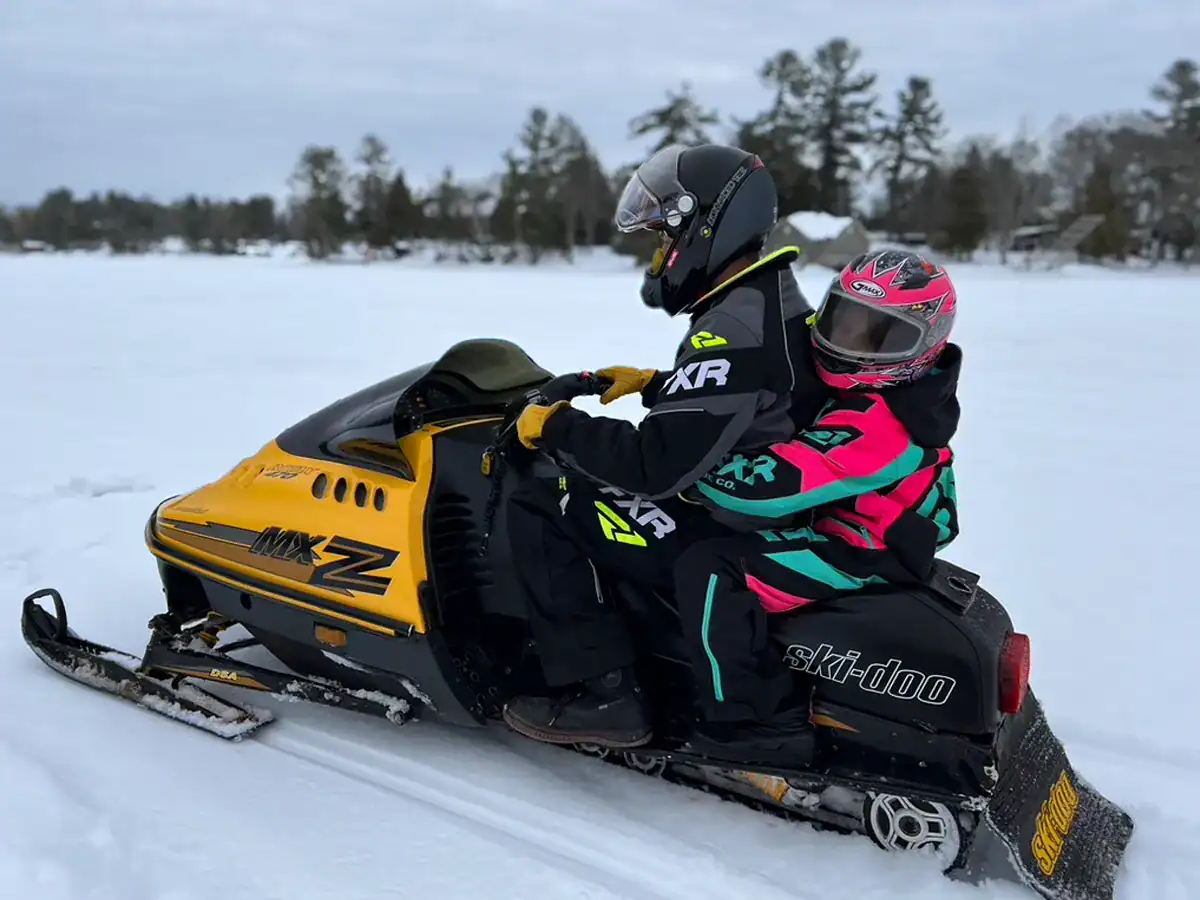
The majority of sleds around here are Ski-Doo (Bombardier). They’ve very successfully penetrated the market and carved out their share. Granted, I’m in Canada, maybe it’s a pride thing, or perhaps they’re just damn good sleds.
I know mine is! Four years in on a 16-year-old, $4000 sled, and I’ve only replaced an $80 belt! I failed to mention that it had over 11,000 km when I bought it, which is high for a 2-stroke engine.
You don’t have to go with the masses, but generally speaking, when you see a lot of a particular brand, there’s a reason – usually it’s price, reliability, styling, etc. Maybe it’s a bit of everything – who knows? My point is that it’s not by accident. It also means snowmobile parts are that much more abundant.
In the event of a breakdown, whether in the shop or on the snowmobile trails, many more people around you will understand your sled and can lend a hand. You’d be surprised to see how well trail riders take care of each other out there.
I should mention that repairing this sled is very easy. Undoing the clips to open the side access panels puts everything you could ever need at your fingertips. Routine sled maintenance, such as checking oil levels and replacing spark plugs, and accessing most parts, is easy. Part placement is also very well thought out.
Check out Ski-Doo Canada’s current lineup.
Yamaha Snowmobiles

On the snowmobile trails, I also see a lot of Yamahas. In general, Yamaha makes excellent products, and I speak from experience. Between the various toys, we have 5 Yamahas in the family. Our other sled is a 2006 model year Yamaha Attak. It was trouble-free the first year we had it. Since then, it’s been a breakdown magnet.
The Yamaha Attak, however, sports a full 1000 cc, 4-stroke engine, a racing motorcycle engine, which Yamaha had to tame a bit for sled-friendly RPMs. It features a unique dual exhaust, which sits under the seat and ports out the back. I’ve yet to come across a sled that can make that kind of a sexy rumble, and watching the steam roll out of both pipes on a cold start is nothing less than magical. I’m serious – if you stand there and wait for it to warm up, you know you’re in for a real treat as you anticipate your upcoming ride.
It’s in the fleet for a reason, but I bring it up because it’s the innovations that Yamaha comes up with and why they’re such a contender.
Yamaha Comes With Some Challenges
Working on a Yamaha is a royal pain in the ass! It takes me 4 hours to do an oil change on the Yamaha Attak. The dealer congratulated me as it took them 3.5, and they do oil changes regularly!!! I’m sorry, but that is not normal. Seriously, it should be a 10-minute job!!! It’s as though their engineers have absolutely zero regard for people who work on these things occasionally.
Not to go off on tangents, but our Yamaha Side-by-Side is the perfect machine for our family’s needs. I test-drove multiple units from all the major manufacturers before deciding this was the one that ticked all the boxes. Even on the SxS, after several attempts and a few curse words, I can’t seem to adjust the handbrake! They placed the adjuster in the worst possible spot for something meant to be extremely accessible.
Yamaha makes fantastic machines worth exploring. The moral of this piece is to suggest upping the budget if you take the Yamaha route – in the hopes of not having to work on one anytime soon:)
Yamaha Canada’s current lineup.
Arctic Cat & Polaris Snowmobiles
There are also a few Arctic Cat and Polaris snowmobiles around, but they are nowhere near as abundant as they once used to be. Again, maybe it’s a regional thing, but I’m sure they both make good snow machines, as they have been around forever. I don’t know much about them, and I won’t write about things I don’t know.
The one thing I do know is that in the late 70’s, Arctic Cat was a renowned player in the sledding world. We had an old 1978 Arctic Cat Jag, and to be honest, it was my favourite sled. It’s a $600 buy that starts, runs, and stops, which is insane considering COVID drove prices sky high.
How do you test a machine like this? Drive it!
Here’s a little teaser video from a 40km backcountry trail run we did the week we acquired the snow machine: This machine is a champ and deserves its blog post, which you’ll have to wait for. In the meantime, keep an eye out for these older, less powerful units. These vintage snowmobiles are exceptionally fun, and if you have kids who are eager to ride their own snowmobile, these are ideal.
Snowmobile Tool Kit & Part Checklist
Before any trail ride, snowmobile safety begins with a few spare snowmobile parts and tools you should carry. Breakdowns do happen, and the last thing you want is to be stranded in the backcountry. The first thing to go is usually the drive belt, and on rare occasions, you can lose your track. Make sure you are always carrying these spare parts for your sled:
- Spark plugs
- Drive belt
- Starter cord
- Fuses
- Mechanic wire/zip ties
As to tools, you will need the following to repair your sled:
- Screwdrivers
- Pliers
- Wrenches
- A rag
- Electrical or duct tape
- Spark plug socket
- Tow strap
At the end of the post, make sure you download the snowmobile tool & part checklist, which includes tips on how to use parts of your snowmobile in a survival situation. And, yes, you absolutely can use your sled to save your life!
Beginner Snowmobile Safety Tips
Crossing on Ice, Safely
I don’t care what anyone says – no ice is safe! Been there, done that, and will do my best to ensure it NEVER happens again!!! It’s not a pleasant experience! What we can do is make things as safe as possible. We have an excellent post on ice safety and steps to take when falling through the ice. How to stay safe on a snowmobile starts with the ice. Before riding on the ice for the first time, verify ice thickness. For snowmobiling, 6 to 8 inches of solid clear ice is recommended. We opt for 8+.
Local Knowledge
2018/2019 was magical on my lake as the ice was several feet thick, providing a worry-free snowmobile ride. There were areas of the lake where certain narrows that join two major sections of the lake were hazardous, even though all looked perfectly good from the surface. What makes it unsafe is the current beneath this section of ice.
This is where local knowledge comes into play, and my advice is to speak to the locals before heading out on unknown (to you) bodies of water. You always need to know what areas to avoid. Locals and snowmobile clubs that regularly drill and measure ice thickness will also help communicate when it’s safe to start venturing out.
Also, remember that measuring ice thickness in one particular spot means absolutely nothing a little further down.
The Flotation Suit for Snowmobiling
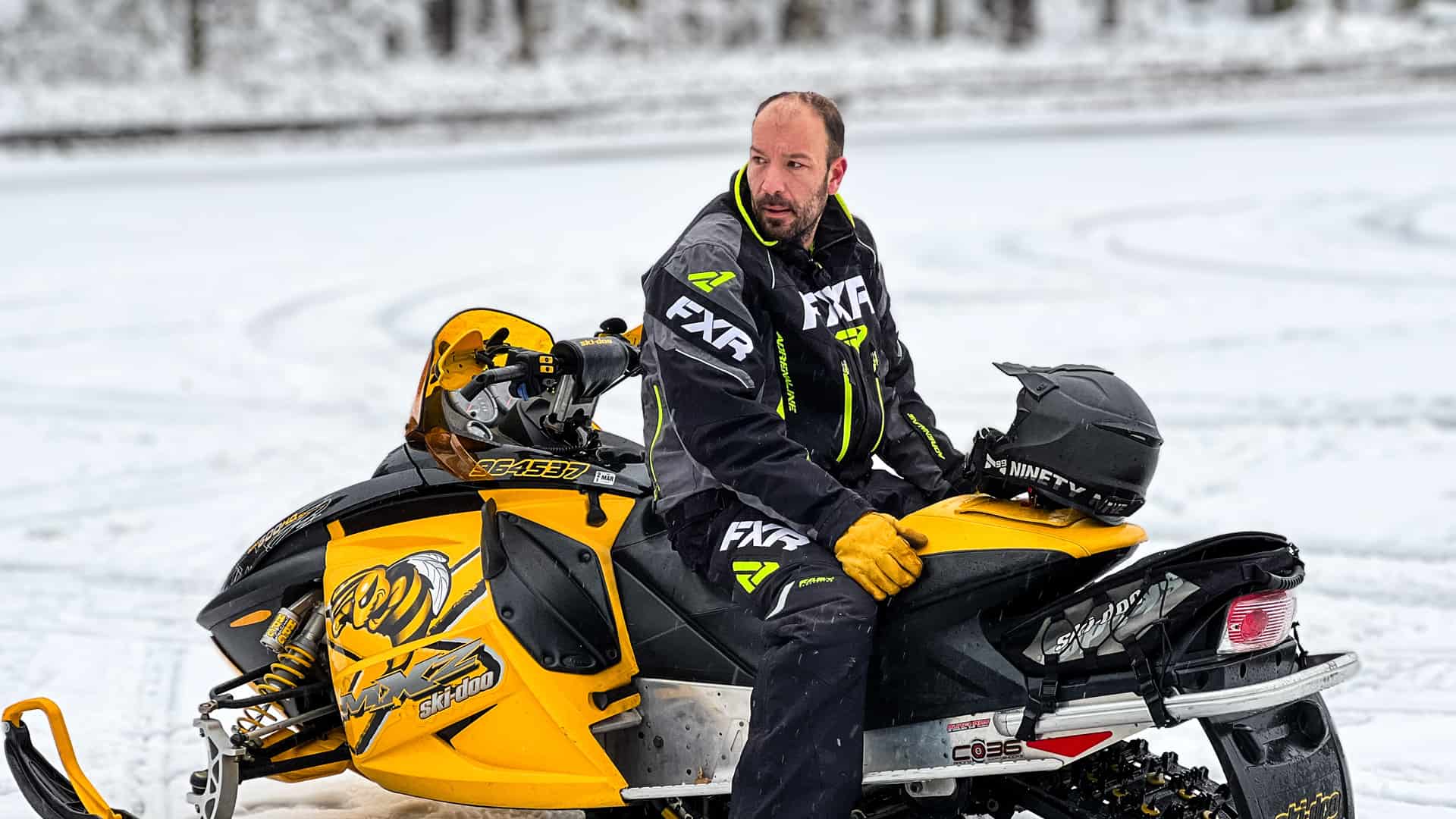
What to wear snowmobiling starts with a suit. There are multiple companies that design snowmobile suits – the one we trust most is FXR. We are huge fans of the FXR snowmobile suits. Specifically, FXR’s F.A.S.T. protective clothing series. These jackets, pants, and monosuits feature built-in flotation. Its job is to keep you above water and warm long enough for a rescue.
It completely boggles my mind that we carry life jackets on boats in case we need them – by the way, it’s also the law. Yet when facing the risk of swimming in ice-cold water, with heavy winter clothing, snowmobile boots, a helmet, etc., most don’t bother to gear up. Without the proper gear, you might last 10-20 minutes in cold water. The shock it gives the muscles is tremendous, and you’ve got multiple factors working against you. If you manage to escape and it’s cold enough outside, you may only have as little as 10 minutes to get dry and into a warm place. Please think about that very carefully.
A forewarning that these floating or survival suits are not cheap, but then again, no amount of money in the bank matters when you are dead. Consider it as a part of the initial costs of buying a snowmobile. Flotation suits are something I recommend to anyone who fishes, skates, walks or is involved in any ice activity. I bought one for the entire family, and I make sure they wear them religiously before going on ice.
More often than not, you can get away with wearing just a base layer under the flotation suit or any insulated snowmobile suit.
Ice Safety Picks
Safety equipment, like the Eagle Claw Ice Safety Picks, is a must. These just happen to be fishing ones, but they are all similar and provide the same function. The picks dig into the ice, giving you enough grip to pull yourself out to safety. When I broke through, I was close to shore and swam out – it’s a different ballgame when you’re surrounded by slippery ice.
Basic Snowmobiling Accessories
D.O.T. Approved Snowmobile Helmet
Good snowmobile helmets are a must. In North America, the snowmobile laws require that you wear a helmet. Unless you want your face and skull to freeze to a painful state, don’t skimp on this one.
During the first year, I used an M99 helmet/goggles combination from Royal Distributing. It got me through the season, and it’s a good helmet, but air always leaked around the snow goggles. I had no choice but to wear a balaclava, and even then, I would still be cold if sledding fast across the lake on a colder day. Trail riding was generally ok. It’s now my backup helmet, or for guests who don’t have their own.
We use Bombardier helmets – a definite game-changer! The field of view is excellent. These helmets seal well with no air seeping in. Its visor is heated, which aids in fogging, but your sled needs to have the corresponding plug to power it. I use the BV2S helmet myself and love it! It costs a fair bit but is worth every penny if you sled regularly.
Warm Gloves
Your hands are the other extremities that will quickly freeze up on you. Use some quality gloves and pray that your snowmobile handlebar heaters are working. I have several amazing winter gloves, yet the only ones that keep my hands warm are by Canada Goose. These mitts are down-filled and super warm. As an update to the post, we discovered some heated gloves, and it’s been a godsend. Another best gloves for snowmobiling is FXR’s Fuel Snowmobile Glove – these run hot, fit great, and are insulated in all the right places.
Snowmobile Boots for New Riders
No matter if you’re sledding the trails, ditch-banging, powering down a lake, or climbing down the side of a mountain, your feet will feel the wind if you don’t wear the proper boots. We swear by FXR’s snowmobiling boots – they’re super warm, albeit a bit clunky. Whatever winter boots you buy, make sure they’re insulated, preferably with Gore-Tex, and can withstand extreme cold temps.
For example, with an air temp of -10 °C and a speed of 60 km/h, the wind chill makes it feel like approximately -23 °C on exposed skin. Your feet will feel the cold if you don’t wear proper boots!
Essential Snowmobiling Gear Checklist
The above covers what you need to wear when snowmobiling, but there is survival gear that you should carry with you. Here’s a list of survival snowmobiling gear beginners should carry:
- Insulated water bottle
- A multi-tool and knife
- Fire starter (stormproof matches and tinder)
- Emergency shelter/Space blanket
- Navigation tools (GPS device, compass)
- Comms (two-way radios, satellite phone)
- High-energy snacks/hydration pack
- Folding snow shovel
- Hand and feet warmers
- Whistle
- First aid kit
- Headlamp/Flashlight
- Warm hat, spare gloves/mitts, dry socks
If you’re in avalanche-prone terrain, you will need to pack snowmobile avalanche safety gear like an avalanche beacon (probe) and transceiver.
Last But Not Least, Legal
Yes, insurance is needed. Unless you stay on your property, you need liability insurance. If you are considering buying a larger engine sled, such as a 1000 cc or so, call and get a quote before you tie up the machine. Some insurers are wary of big engines on toys and will have higher rates. Others may refuse to insure altogether.
You also need a trail pass if you intend to hit the snowmobile trails. Unlike ATVs, a trail pass isn’t super local. I’m in Ontario, and an OFSC trail pass covers the whole province. This is perfect, considering many sledders do giant loops. I have quite a few things to say about the trail pass situation, but it is what it is.
If you’re in the Peterborough area, check out our Nephton Mine trail post, where we mention the snowmobile trails that circle Havelock, Apsley, and Coe Hill.
In Ontario, the legal age to ride a snowmobile on the trails is 12. Between the ages of 12 and 15, youth need to have a Motorized Snow Vehicle Operator’s License. Ages 16+ need a valid driver’s license or MSVOL to ride the roads. Children under the age of 12 are allowed to snowmobile on their home property.
Finding a Snowmobile Club
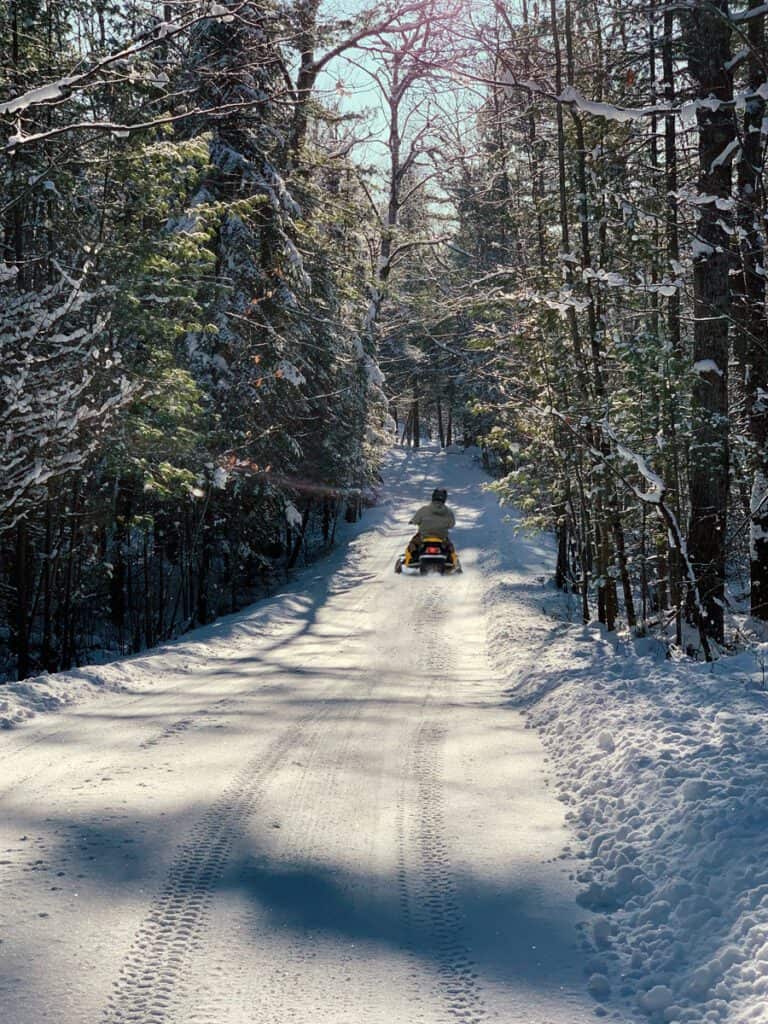
Every new snowmobiler always asks, “How do I find local snowmobile clubs or guided tours for beginners”? Wherever you buy your trail passes from, they usually give you access to local snowmobile clubs. For us in Ontario, it’s a separate link on the OFSC website. Once you find a club, if they’re active, they will post guided tours or ride-alongs on their Facebook pages.
Free Download
Click the download button below for your FREE PDF copy of our Survival and Breakdown Checklists:
👉 Thank you for reading my snowmobiling for beginners post. What are you most looking forward to – riding with a group, hitting the trails, or just freestyling it?
Bookmark this post on Pinterest for future reference!