
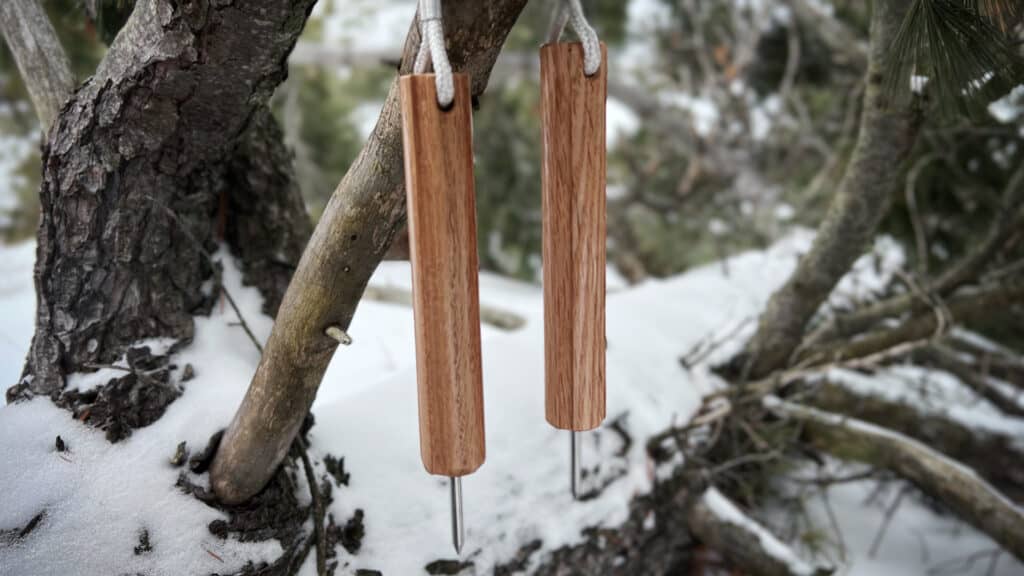
Winter doesn’t have to be boring! The ice provides plenty opportunity for you to enjoy activities like skating, snowmobiling, and ice fishing. But the risk of plunging into icy water can be severe and often overlooked. Without proper protection from the elements, many icy adventures may end in disaster. Safety ice picks provide protection, giving you the confidence and freedom to explore or enjoy a new winter hobby.
Spread the Love
Disclosure: Posts may contain affiliate links. Purchases made through our links result in a small commission to us at no charge to you. We only recommend products that meet our brand standards based on testing and first hand use by our authors.
1. Winter Activities Start with Ice Safety!
As your mama always told you – SAFETY FIRST! And, then you rolled your eyes. But in this case, it’s serious, and potentially life threatening.
- First, be sure to check the ice depth in several areas, as well as the condition of the ice (see guide below).
- Avoid travelling on the ice at night or when snowing; reduced visibility increases the risk of travelling on weak or open ice.
- Whenever you venture onto the ice, travel in pairs and let someone know where you are going and when you expect to be back.
Ice Safety Tips for Winter Sports and Recreation
Some people are not aware that rivers and narrows between lakes (moving water below) often have thinner ice. These are areas where you need to be very vigilant! If you don’t have the gear, don’t cross. If that little gut feeling goes off, listen to it. Wear a thermal protection buoyant suit, flotation snowmobile suits, or life jacket, which will increase your chances of survival should you go through the ice.
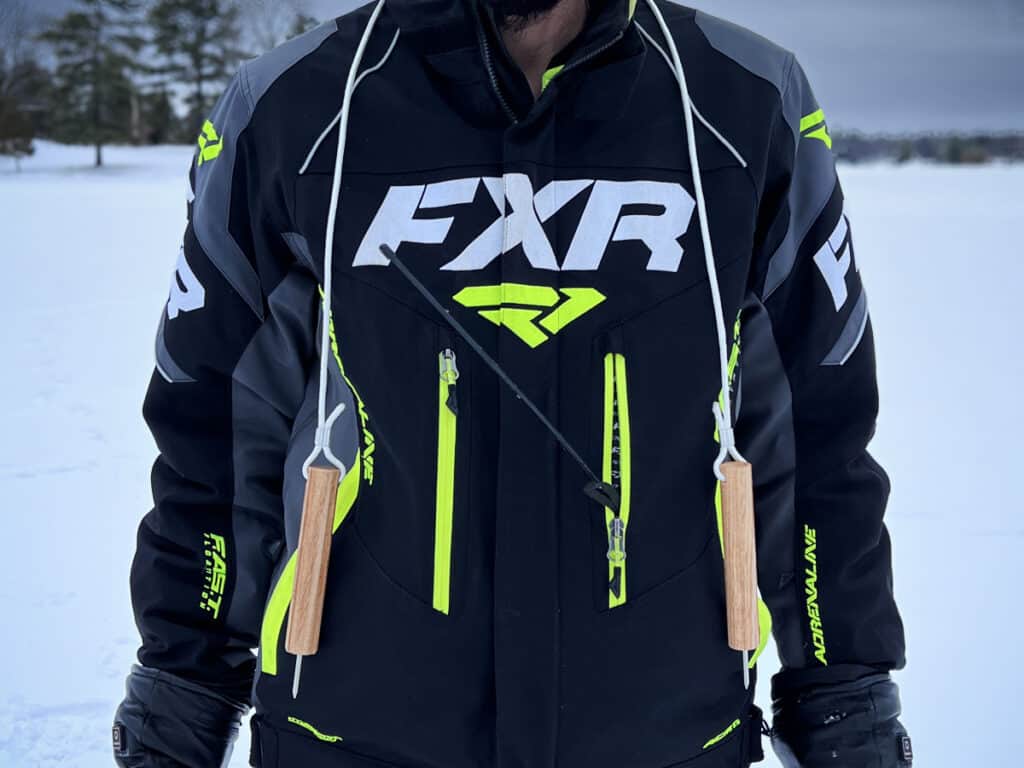
You should also carry ice safety gear, like safety ice picks / ice claws, a rope and a small personal safety kit. Alcohol impairs judgment and coordination. It also increases the risk of hypothermia, so maybe lay off the booze until you’re on land safe and sound.
Have an escape plan before you drive onto the ice. Unlock the doors, open windows, and do not wear a lifejacket while in your vehicle. Lastly, always supervise children playing on or near ice. Children do not think about outcomes.
FURTHER READING:
Don’t Risk Drowning! Discover how a snowmobile floater suit can help you survive the fall through the ice.
2. Ice Strength, Ice Thickness, and Colour

No ice is guaranteed safe ice! Understanding ice thickness guidelines is super important for you safety on frozen bodies of water. Know that ice does not thicken uniformly – always use a tape measure and measure thickness at multiple points. Here is an overview of how thick ice should be for ice fishing and winter sports.
Ice Thickness Guidelines
- Stay off ice that is 0 to 3″ thick!
- 4″ – 1 Person with Gear (walking, ice skating, ice fishing)
- 6 to 8″ – 1 Snowmobile or ATV
- 9+ – Multiple Snowmobiles, ATV’s
Ice colour is just as important as thickness. The colour of local ice conditions is a key indicator of its strength and breadth. It is vital for you to understand what each colour means.
- Light gray to dark black usually indicates melting ice and should be avoided, as its weak density can not hold a load.
- White to opaque ice is likely water-saturated snow which indicates weakness.
- The safest ice to be on is blue to clear – this is considered ‘good ice’, although it is only safe if more than four inches thick.
- Mottled and slushy ice, regardless of colour, is thawing and should be avoided, as it can be deceptive and appear thick but be rotting away at the center and base.
Be mindful of these ice colours when exploring – safety first!
FURTHER READING:
Looking to Keep Those Fingers Warm This Winter? Read our Karbon Heated Gloves vs Holmes Heated Work Gloves Review.
3. How To Self-Rescue with Ice Safety Picks from Open Water
The last thing you want to do is panic when entering icy water, which is easier said than done. Here is what you should do if you fall through the ice:
- As you’re falling into the icy water, cover your mouth and nose with your hand to reduce the chance of water entering your larynx, which can impair breathing.
- Instead of allowing the momentum of your fall to take you further down, try to slow yourself down. Spread your arms and legs, and pull them together as you reach waist depth.
- Once in the water, it is critical to get your breathing under control, which may take up to a minute. Then, turn to face the direction you came from, as this is where the most durable ice likely is located.
- Swim back to the edge and deploy your emergency safety ice picks. Make sure to stab the ice safety picks close to the edge, as it will provide more support for your weight.
- Use your elbows and safe ice picks to pull your upper body out of the water, then employ a frog kick to get your legs out.
- Drag yourself away from the edge to get to an area where the ice is strong enough for you to stand up.
- Lastly, if you have a throw rope, ensure you throw it back to anyone still on the ice.
4. Reducing the Risk of Hypothermia
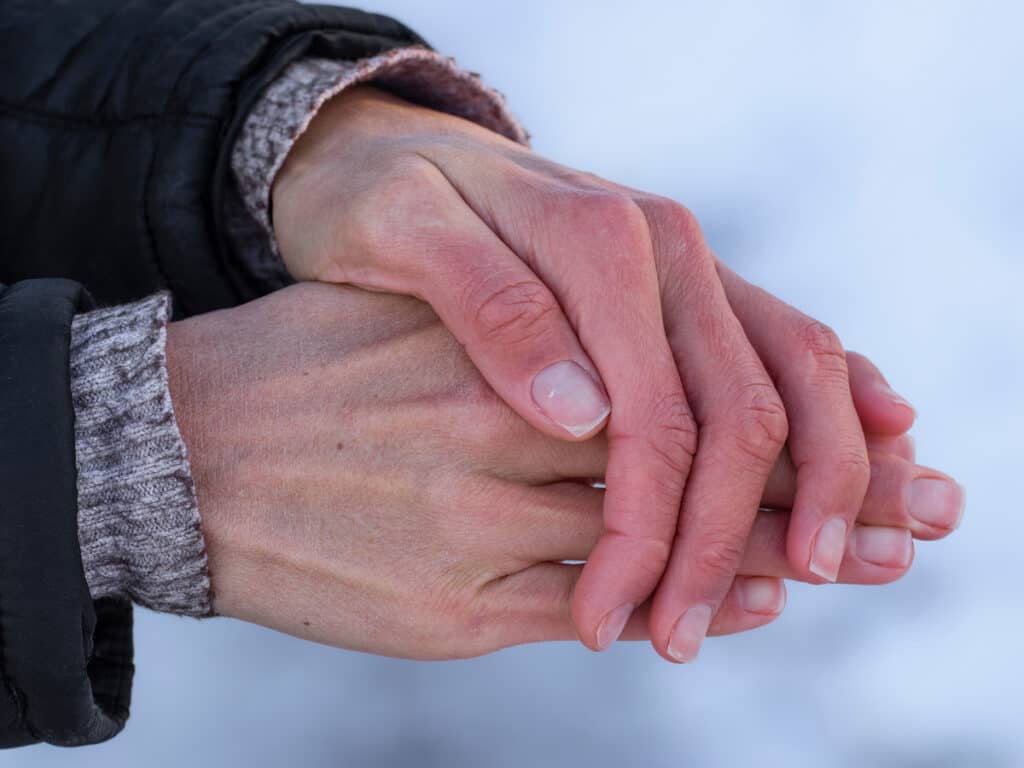
For hypothermia prevention, you must understand what happens to the human body when immersed in cold water. Developed by Dr. Gordon Giesbrecht is the ‘1-10-1 Principle’ of cold water immersion. The phases are as follows:
- 1 Minute to Control Your Breathing: Within the first minute, it is natural for panic to set in, especially when you are not anticipating entering cold water. An immediate gasp followed by hyperventilation (fast, uncontrolled breathing) means your primary concern in this 1-minute window is to gain control of your breathing and to keep your head above water.
- 10 Minutes of Useful Muscle Movement: Following the cold shock stage, you have about 10 minutes of meaningful movement during which you can still swim and attempt to self-rescue. If your self-rescue attempt is unsuccessful, pull yourself up onto the ice as far as possible and stay still to conserve energy. If there are people nearby, call for help or blow your whistle.
- 1 Hour Before Losing Consciousness Due to Hypothermia: Studies show after spending about 1 hour in water that is close to 0°c, you will become unconscious due to hypothermia. If you can keep your airway above water with the sleeves of your jacket or keep your hair from freezing to the ice, you may survive another hour or more before dying from hypothermia. Survival depends on the amount of body fat you have, your insulation, how much of your body you can get out of the water, and the exact water temperature.
Stages of Hypothermia
You DO NOT want to end up with hypothermia, but it will happen if your exposure to the cold is too long.
To avoid it, get out of the cold / icy water and dry up as fast as possible. Seek warm shelter right away to warm up, and if remote, get a fire going ASAP. If you start to experience any of the symptoms of hypothermia (dizziness, shivering, confusion, etc.), immediately call 911 for medical help.
Most people do not know what hypothermia feels like, and are not aware that they are already going through the stages. As part of your survival skillset / knowledge, learn to recognize the signs of hypothermia. This will allow you to deal with it faster before it’s too late.
Mild Hypothermia: 90 – 95 degrees Fahrenheit
- Shivering
- Confusion and fatigue
- Unable to coordinate movement
Moderate Hypothermia: 82 – 90 degrees Fahrenheit
- Intense shivering
- Confusion, amnesia, loss of consciousness
- Slowed breathing
Severe Hypothermia: 82 degrees Fahrenheit and lower
- Slowed heart rate
- Slurred speech
- A decrease in perception and judgment
- A decrease in consciousness
FURTHER READING:
Life Lesson Alert! Learn how to make fire in the snow build guide.
5. Cold Water Safety Make Ice Activities Easier, Safer and More Fun!
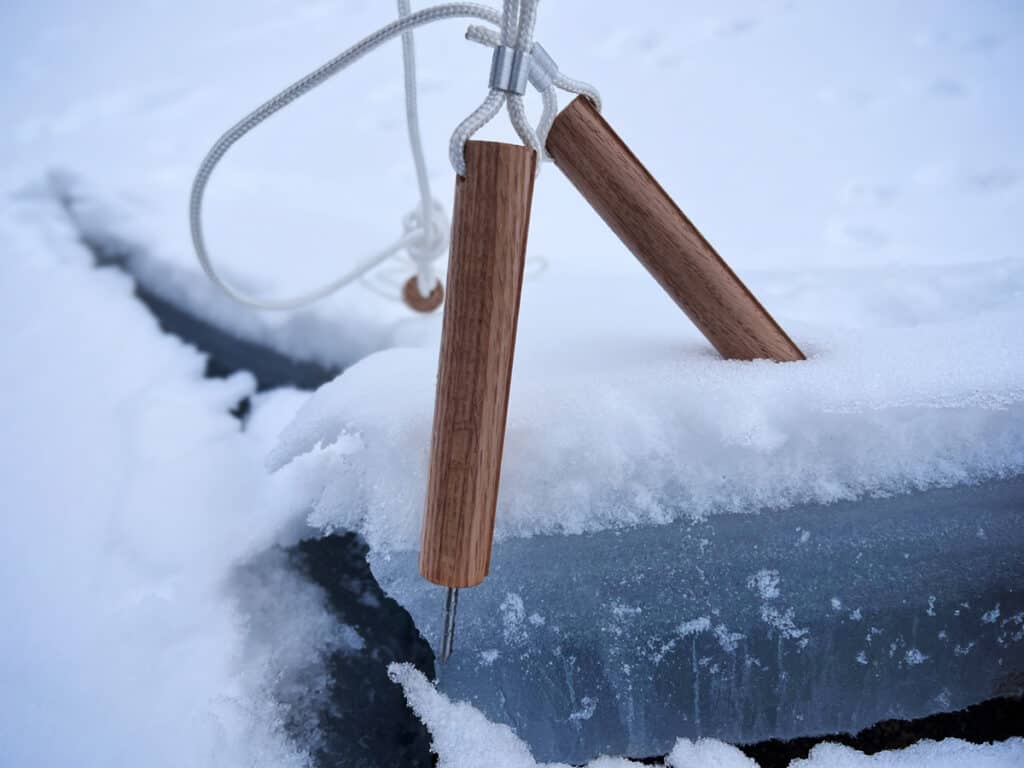
A fresh sheet of ice covering a lake or pond is so inviting, especially at the start of the season. This is when accidents happen the most. Safety ice picks are a must for any ice activity ranging from skating to snowmobiling. For quick and easy access, safety ice picks should always be worn around your neck.
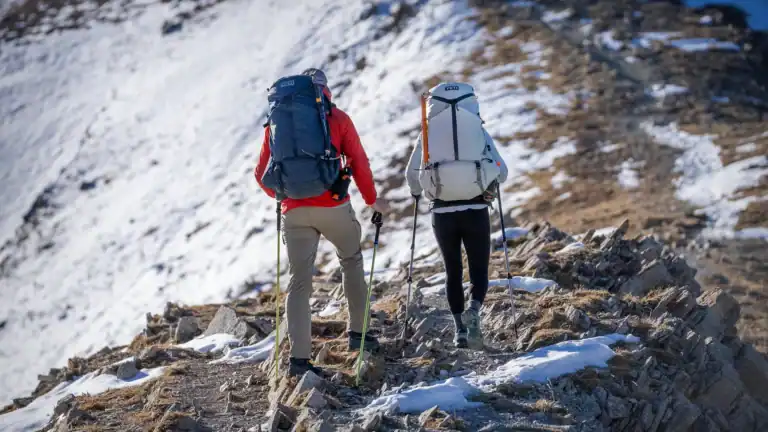
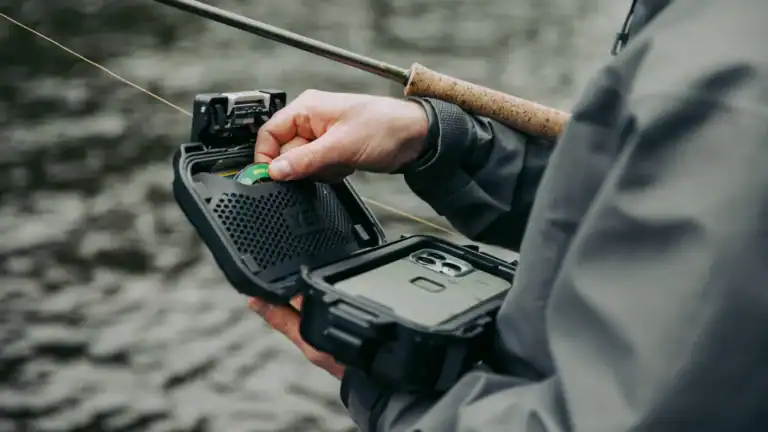
For added safety, wear a flotation suit with a personal locator beacon to help emergency responders locate you quickly. Your phone should be placed in a waterproof case. If your boots don’t have built-in cleats, consider wearing ice cleats if you’re hiking across the ice. Spending a few extra minutes on safety preparedness ensures a safer and more enjoyable winter activity!
Best Ice Picks for Winter Survival
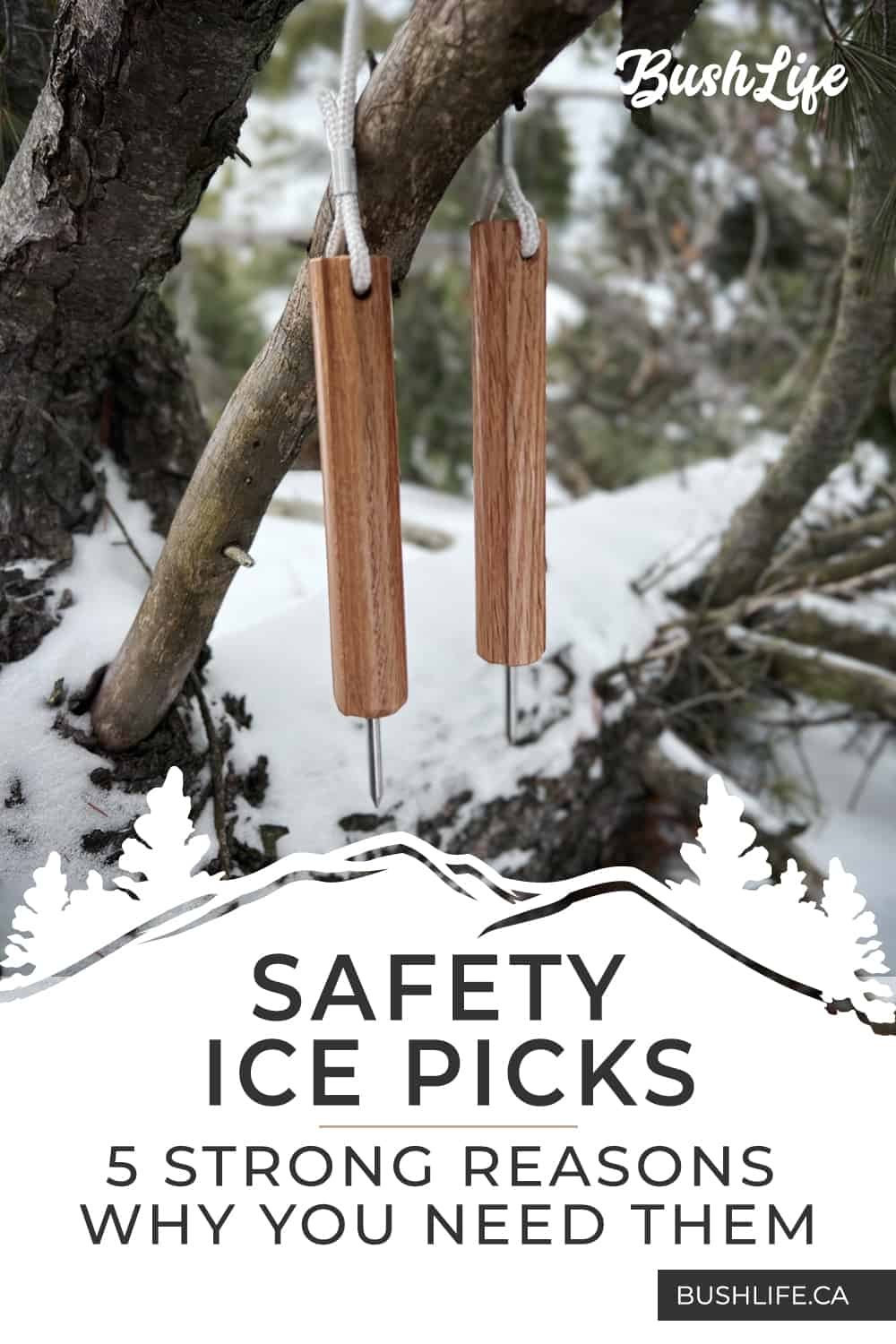
In the days of Covid and product shortages, it was difficult to find emergency picks, let alone retractable ones. By some miracle, we finally found some non-retractable safety ice picks, pictured above in the post. They are handcrafted locally and are not available online.
Unfortunately, these ice safety picks are non-retractable, but at the end of the day, something is always better than nothing. When we started snowmobiling, most snowmobilers were sporting ice fishing safety picks from Eagle Claw or Frabill who swear that these are the best ice safety picks.
Eagle Claw is a reputable fishing company, and these safety ice picks for fishing have good reviews. In full disclosure, it is one of the few times we may recommend something we do not own ourselves. If you’re looking to find an ice pick near you, start with your local bait shops and sporting goods stores for ice fishing picks. With a little luck, they might have a retractable ice pick in stock.
Another top rated safety ice picks worth looking into are ice awls from Pick-of-Life.
When shopping for self rescue ice picks, ensure they have retractable sheaths around the points. This will help you avoid accidentally poking yourself or others. Or at the very least an ice safety pick cover. Furthermore, the ice rescue picks should be durable with a quality, buoyant lanyard to keep them attached.
A Final on Survival Safety Ice Picks for Winter Activities
Ice activities are a fantastic way to experience winter. They help keep those dreaded winter blues at bay. However, keeping safe is paramount. Emergency safety ice picks provide an affordable and effective way to keep yourself and your family safe on icy adventures. With adequate protection and ice rescue tools, you can take your winter activities to a new level of thrilling exploration. You can enjoy them without the worry of falling through helplessly.
👉 QUESTION: Do you wear safety ice picks? If so, which ones work best for you?
Help bring awareness to ice safety by sharing this article with family and friends – thank you!
Bookmark this post on Pinterest for future reference!





I like this because it strikes the perfect balance between excitement and caution. It encourages winter fun while emphasizing the importance of safety, making it both inspiring and responsible.
Thank you so much for your comment!! We try to stress that the outdoors do not need to be feared. With a little bit of prep and skill you can enjoy all kinds of amazing winter activities. Winter can be very long with nothing to do!
I live for n Florida but if I ever move back up north I’ll definitely be getting one!
Florida is such a beautiful state, it’s hard to leave the warmth for the icy cold.
This is some great information that I hope I will never ever need!
I’m with you on that! I’ve seen people breakthorugh and it’s not pretty. Thank you for your comment!
I’d never thought about the importance of safety ice picks before today. Proof, once again, that such a small object is in fact an essential item that everyone should have if they’re planning an activity on the ice. An important, interesting and helpful article. Thanks so much for sharing!
Thanks for explaining why an ice pick is needed for safety. I really feel this post is about saving lives. Living up north, it’s essential to know how to read the ice. Thank you!