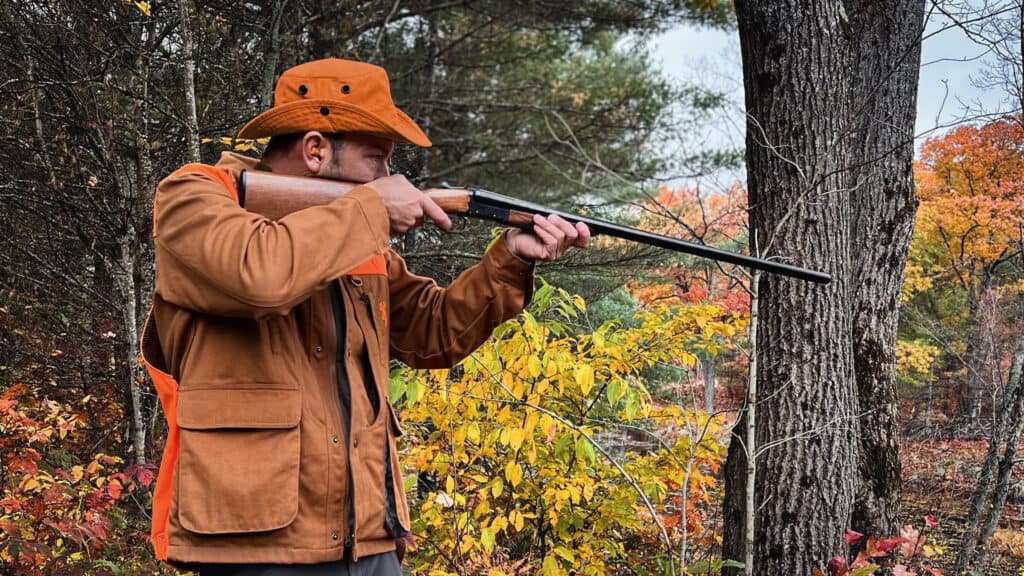
Hunting can be an exciting and rewarding outdoor activity, but it is crucial to practice hunting safely at all times. Whether you are a novice hunter preparing for your first hunt or an experienced hunter brushing up on your skills, learning and following the dos and don’ts of hunting safety is paramount. This blog post will focus on the most imperative safety hunting tips for a safe and successful hunting trip.
Spread the Love
Disclosure: Posts may contain affiliate links. Purchases made through our links result in a small commission to us at no charge to you. We only recommend products that meet our brand standards based on testing and first hand use by our authors.
Safe Hunting Starts with Wearing Proper Hunting Attire
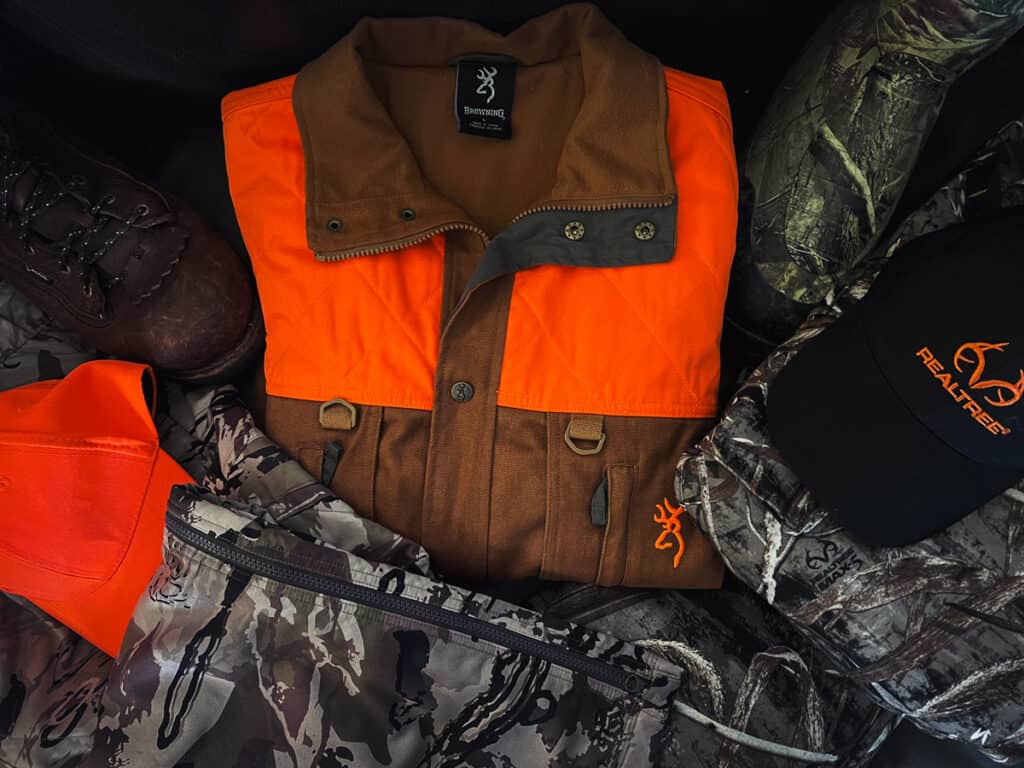
Whatever the game species, proper hunting gear and clothing will bring you that much closer to success. Let us start with what to wear when hunting. You can pretty much wear whatever you want as long as it is comfortable, breathable and will keep you warm and dry, but before you go and put on your choice of clothing, consider what wild game you are hunting.
Do Deer See Colour?
Deer can easily spot yellow and shades of blue. But can they see orange? Nope, the orange colour appears grey or brown to them. In this instance opt for wearing vivid colours, like green, orange and red, which deer can not see.
What Colors Should a Safe Hunter Avoid Wearing When Hunting for Wild Turkey?
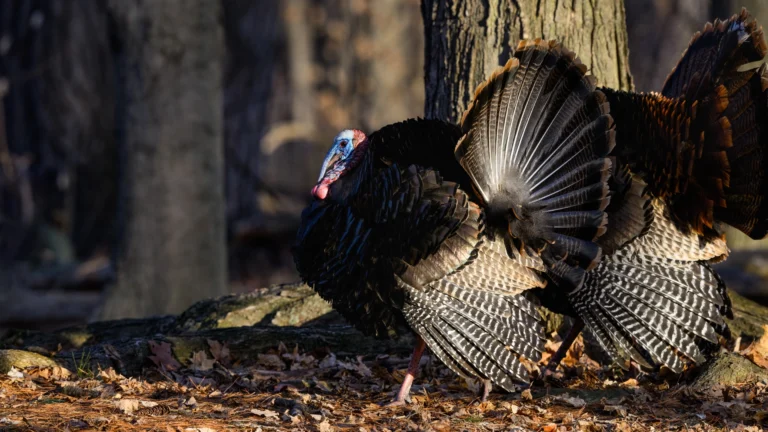
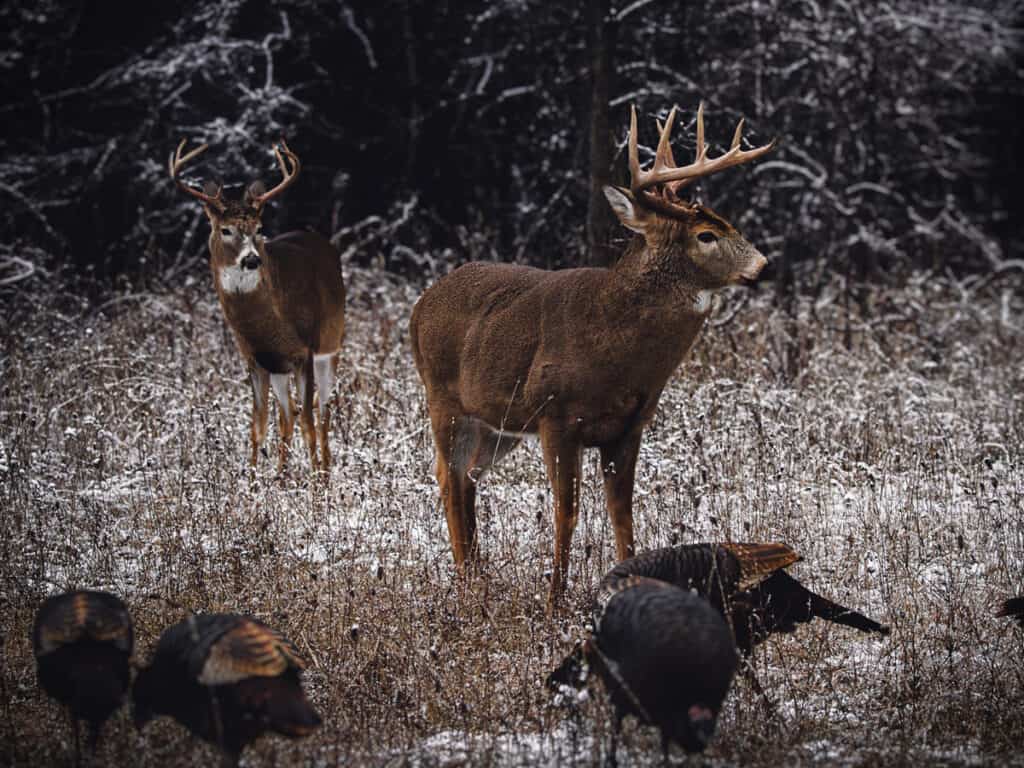
When hunting for turkey, do not wear blue, white, red, or black clothing. These colours will mistake you for a gobbler, and the potential outcome can be fatal.
For many hunters, wearing camouflage during the hunting season makes it easier to avoid wearing the wrong colour. Camo colours and patterns help you blend in with your surroundings, by distorting your outline thus allowing the prey to come in closer.
FURTHER READING:
Hunting Waterfowl for the First Time? A good waterfowl hunting outfit and gear gets the birds.
Is it Necessary for You to Wear Camouflage?
No, not really! For as long as humans have been hunting, they have worn whatever they had and, over time, whatever made them comfortable. Comfort here is the key!
Human nature is to fidget when things are not quite sitting well. I have personally witnessed hunters wearing pyjama pants, and they had many successful hunts. That goes to show you that camo is not necessary, but it does look real nice :)!
If you haven’t scored some camo yet, consider the surrounding colours of the area (greens, browns, etc.) and try to choose colours that help you blend in. This is critical if hunting turkey – these birds can see everything, including that brightening detergent you used! Check out my post on how to go undetected with the best camo for turkey hunting.
Safe Hunters Garment Legalities
Now for some legalities for hunting safe. These regulations may differ in your province or state.
According to the Ontario regulations, “All licensed hunters, including bow hunters, falconers, bear hunters and trappers who are hunting under their trapping licence during a gun season for deer, elk or moose, are required to wear hunter orange. In addition, all licensed bear hunters hunting during the open season for black bear, which is not a gun season for deer, elk or moose, are required to wear hunter orange except when in a tree stand”.
Why Hunter Orange for Hunting Safety?
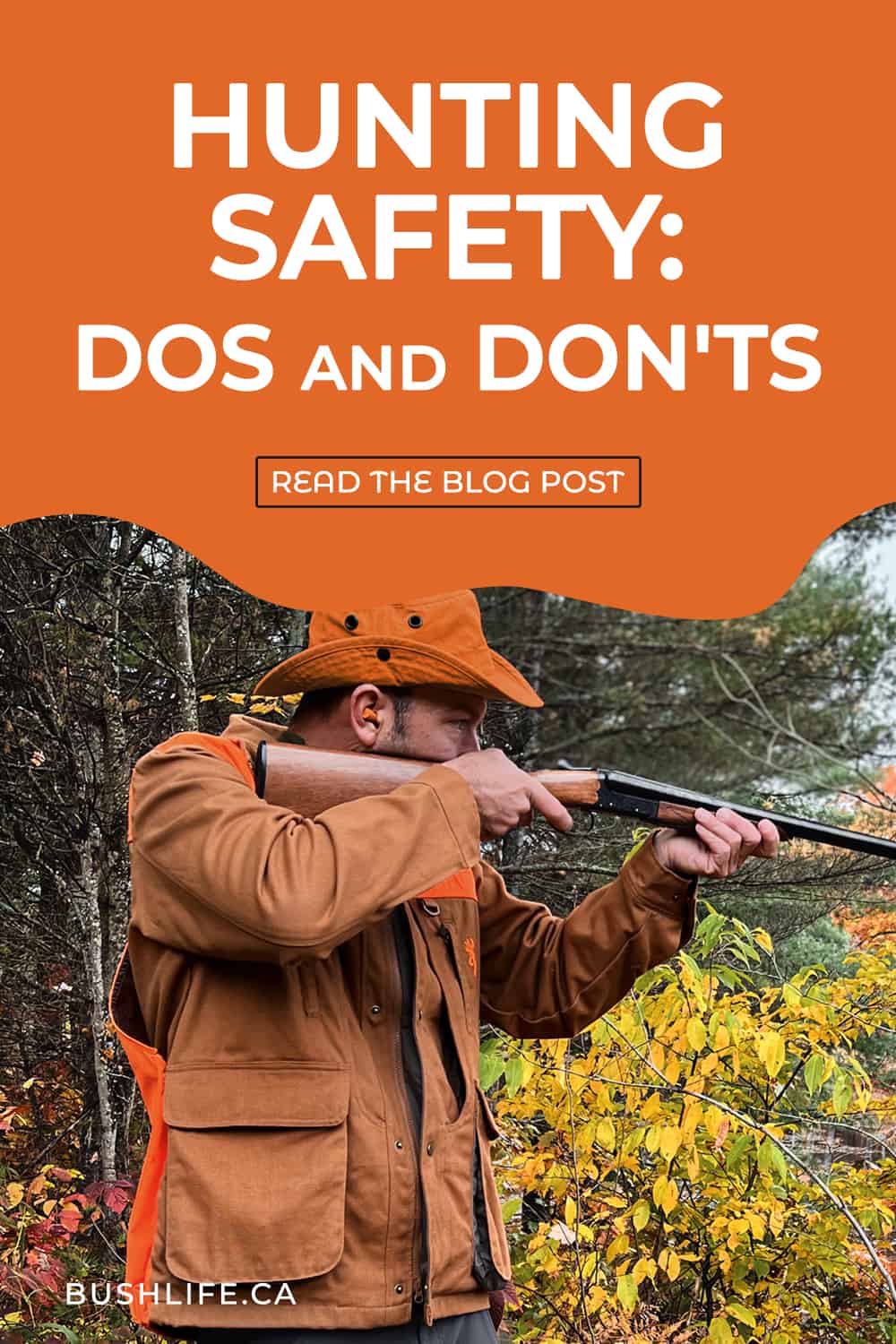
Nothing in nature matches orange, therefore allowing other hunters to spot you from a considerable distance. How much of the colour orange do you have to wear? According to Ontario regulations, you must wear a hunter-orange hat and garment. The hunter-orange garment must cover a minimum of 400 square inches above the waist and be visible from all sides. This is part of hunter orange requirements that ensure your safety in the field.
Hunter Orange Pro Tip
Don’t mess covering up the orange with your pack! If you intend to carry a backpack, get a hunter orange pack BEFORE your hunt.
Blaze orange is a hunter’s most important item of clothing! Don’t just follow these rules for the law!!! For example, you will spot a hunter from a mile away when they wear a blaze orange jacket on a dark December day. That same hunter you may never see even from close range if they are wearing camo.
Hunting accidents are rare, and the average hunter knows that and should be proud of it – but on that same token, there is no room for error or lax hunting safety steps.
It ONLY takes one accident to be DEADLY, so for safe hunting practices, please just wear your solid hunter orange! This hunting orange attire is crucial, especially in wildlife management areas where multiple hunters are present.
Safety Hunting Tips for Gear
We assume that you already have your hunter safety course completed and your hunting license in your hand. Make sure you have your hunting tags purchased before the hunt.
To hunt moose, deer or elk, you must go through an allocation process and be successful. Once you have your game license and a valid tag, you can proceed with the hunt when the season opens. But, before you do, let us look at the dos and don’ts of hunting safety gear tips.
Boots
DO:
- Gear up for the hunt with the proper boots for the weather and season.
For cold-weather hunting, I use the Irish Setters Elk Tracker 860. These waterproof leather boots are very well insulated, keeping my feet warm. Not to mention, the Irish Setters have ScentBan technology incorporated into them. So far, I have not had any issues with these waterproof boots.
For those warmer-weather hunts, I use the Irish Setter Waterproof Pull-On boot. This 17″ tall rubber boot is insulated and also has ScentBan technology. Making it a great boot for that springtime or early fall hunt.
DON’T:
- For a second, assume that any old boot will do. It does not take long for the ground cold to creep in, leaving you feeling cold and miserable. Above all, do not forget to pair it with the appropriate weather socks. You can also invest in some heated socks to keep your feet nice and warm.
- Avoid wearing boots that are not suitable for the terrain or weather conditions you’ll be hunting in.
Pro Hunter Safety Tip
To keep your feet warm and toasty, put on thin socks and tape a foot warmer to the bottom of the thin socks. Layer on a thick sock to hold it all in place – and in insulated fashion! In the next best thing to heated socks.
Rifle
DO:
- Make sure that your weapon is sighted in before your hunting trip. Doing so will help prevent any accidents from happening, even for the safety of the animal. You do not want to wound the prey but kill it.
- Unload your gun before crossing a fence, going up your tree stand, getting into (or on) a motorized vehicle or on a trail.
DON’T:
- FORGET TO CLEAN YOUR GUN!!! after your hunt.
- Get anything stuck in the barrel. Be careful where you put your gun down.
- Never discharge your rifle up in the air or without a safe backstop.
FURTHER READING:
Don’t Forget to Clean Your Rifle! Read our post to discover time-tested techniques to Preserve Your Gun.
Backpack
What should safe hunters always have with them when they leave for a hunt?
DO:
- Safe hunters should carry the following survival items: fire kit, multi-tool, emergency whistle, compass, flashlight (headlamp), dry towel, toilet paper, food, water, portable filter, GPS, two-way radios, batteries, first aid kit, trail-marking tape, safety glasses, ear protection, game calls, spare socks, rain jacket, gloves (heated gloves), hand and foot warmers, gutter gloves, permanent marker, butt-out tool, deer drag, pelvic saw, tarp shelter (survival blanket), and cordage.
DON’T:
- Bring anything shiny. Animals can spot it from miles away. Also, do not bring any stinky food! It will deter the animals.
- Don’t overpack or weigh yourself down with unnecessary gear.
- Cover your hunter-orange clothes with a non-hunter orange pack!!!
Range Finder
DO:
- Take the time to scan landmarks and set yardage markers that stand out.
- Use your rangefinder (or binoculars) to search for wildlife identification and NOT your rifle!
DON’T:
- Complicate an opportunity for a good shot by guessing the distance between you and your prey.
Knife
DO:
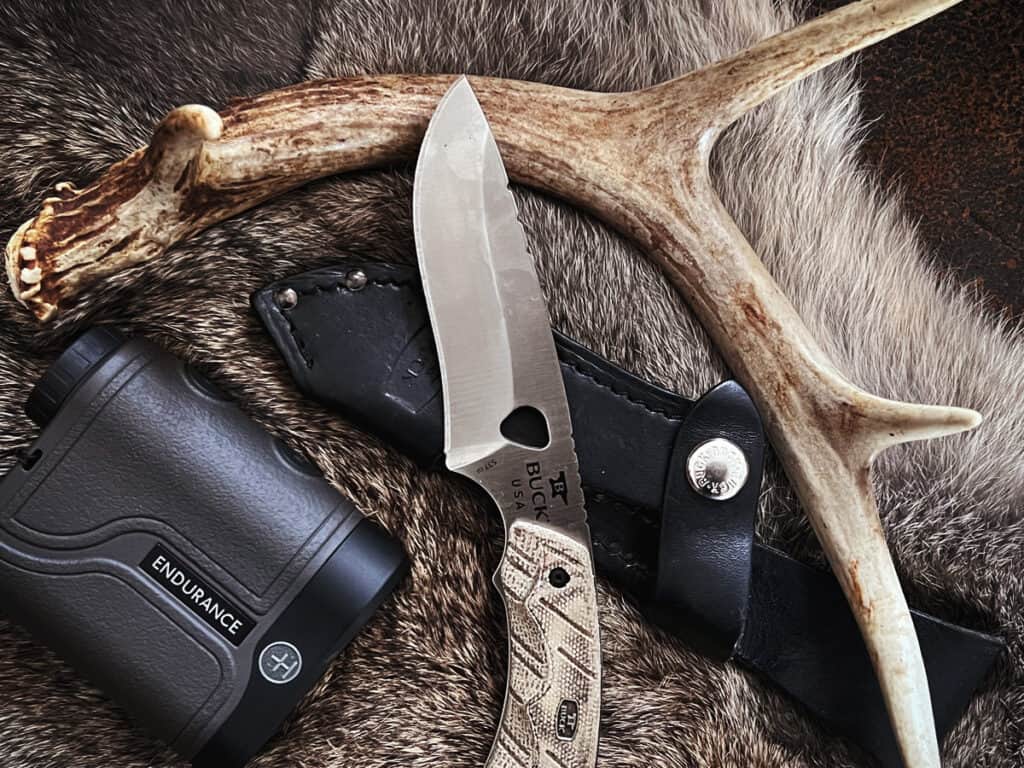
- Carry a quality hunting knife with you. There are many uses for a sharp hunting knife when hunting, like field dressing (cleaning game), cutting rope, notching tags, and any safety survival situations that may arise.
FURTHER READING:
Morakniv Garberg Carbon Knife Review. Discover what makes this and other Bushcraft Knives So Special.
Scent Repellant
DO:
- Spray yourself with scent repellant (scent-blocker) to minimize odour BEFORE you head out hunting.
- Hunt so that your scent is down wind! Whether you spray yourself or not!
DON’T:
- Assume that just because you saw a deer without using a repellant, they cannot smell you. You may have been sitting in a direction where the wind was blowing in your favour. Deer are amazing at hiding themselves when they sense danger.
Other Hunting Safety Gear to Bring with You
DO:
- Remember to bring haul line to hoist your unloaded rifle if using a tree stand.
DON’T:
- Forget your hunting license and tags, scent attractants, cooler, seat/cushion, binoculars, ammo, ammo case, gun cleaning kit, decoys, and your ATV or Side X Side, which is also part of your gear if not on foot. It is your mode of transportation between camp and the stand.
FURTHER READING:
Organize Your Tags & Gear! Stay prepared and secure with the YETI LoadOut GoBox – perfect for licenses, tags, and your hunting accessories. See the LoadOut GoBox →
Hunting Safety Rules for Moving Safely
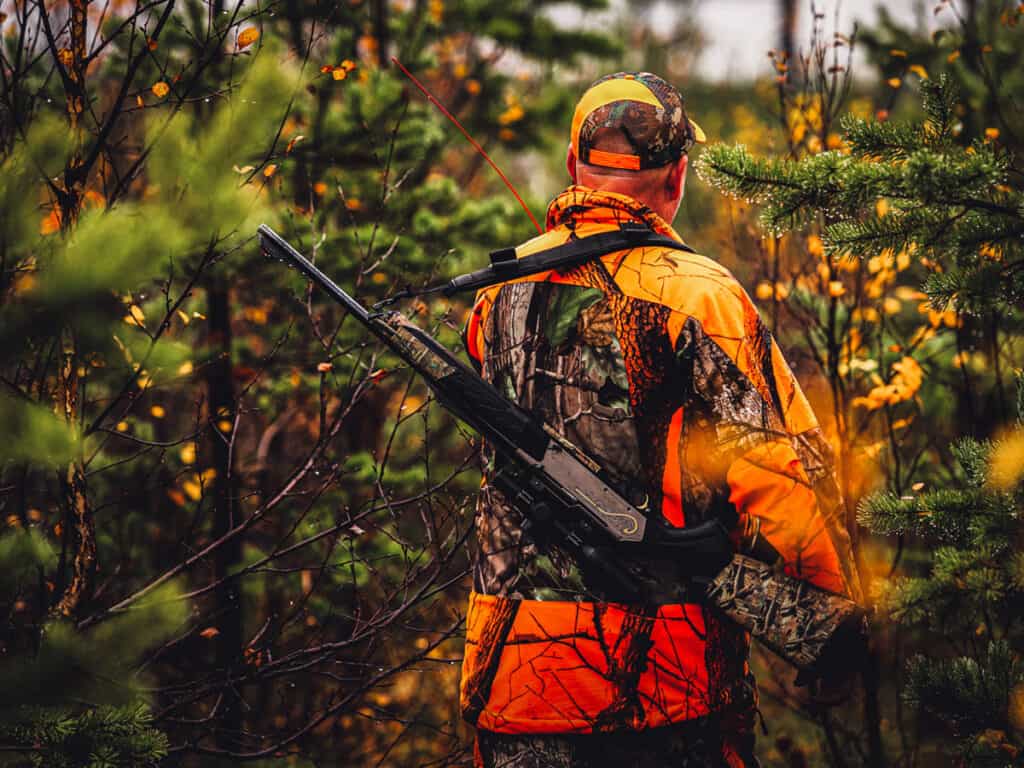
Most newbie’s may not be aware of how should hunters walk together during a hunt. This is so crucial to know, and if not followed carefully, it could be fatal to you or the other individuals in your group. Your safe zone should be discussed before the start of the hunt. A typical zone is 45-degrees in front of you – make sure your firearm stays within these boundaries! Walking side-by-side at 25 to 40 yards away from others is a good rule of thumb to follow.
DO:
- Practice tree stand safety by notifing your group when moving from the stand.
- Remember that changing locations changes the safe zone of fire for every hunter, not just you.
Know Your Hunting Area
DO:
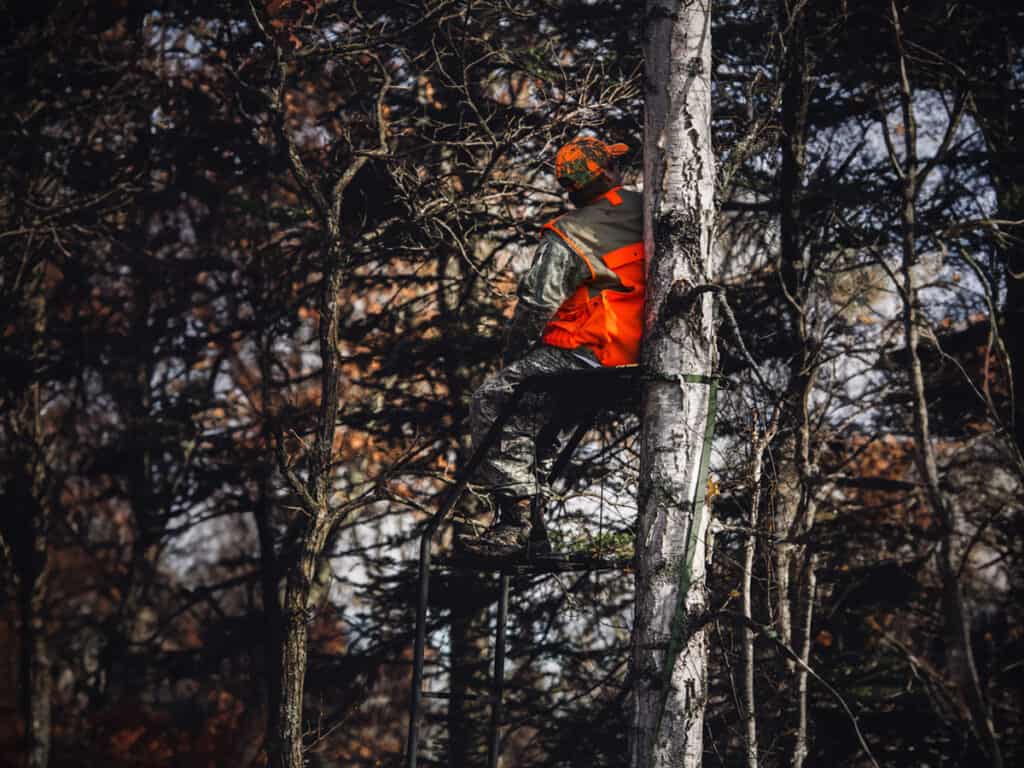
- Take the time to scout your hunting environment before your hunt. Try to see if you can spot the game trails. Know where the property limits, homes, shelters and roads are.
- Survey the shot line and ensure clear visibility to the target area. A nearby cover is ideal because it breaks up your body outline.
- Close gates on private property.
DON’T:
- Invite too many people to join in on the hunt, as your chances for accidents go up tenfold. There is always that one person in the group who refuses to follow your or the landowners’ rules.
- When hunting with that yahoo mentioned above, do not stick around! As soon as it is safe to do so, leave immediately! It’s not worth the risk.
- Just place your stand wherever you think it is appropriate. Hang it too high, and you have no shot. Hang it in the wrong direction, and you might end up blinded by the sun, which is a huge safety issue. Make sure you are not hanging your tree stand on an unhealthy tree!
- Hunt on private property without WRITTEN permission.
- Hunt alone.
Respect for Other Hunters and Animals
DO:
- Positively identify your target before taking your shot.
- Shoot, only what you can retrieve and use harvested game.
- Obey the limits.
- Take responsibility for your actions.
- Move quietly if you see a hunter in your spot, and they got there before you.
- Share your knowledge and skills with other hunters.
- Pick up your empty shell casings and collect all your gear AND trash.
- Keep your finger off the tigger until you are ready to shoot.
- Shout to identify yourself when another hunter is approaching.
DON’T:
- Shoot after legal hours or off-season.
- Spread your gear out, and keep your footprint to a minimum.
- Force yourself to take a shot if you are unsure. Doing so could lead to an injured animal if your aim is off.
- Set up tree stands where they may disturb other hunters or the landowner.
- Consume alcohol. It will impair you to the point that you will endanger fellow hunters and animals, not to mention yourself.
- Interfere with another hunter’s hunt.
- Ever stalk a turkey.
- Leave your garbage lying around.
- Shoot in the direction of a person!
- Shoot in the direction of an animal that you are not hunting.
- Point a firearm at yourself or another person. Keep it pointed in a safe direction, downrange.
- Place your decoys in the line of fire of another hunter.
FURTHER READING:
Having a hard coping with your harvest? Learn how to keep your emotions in check with our Hunting Emotions post.
Keeping Firearms and Ammunition Secure
DO:
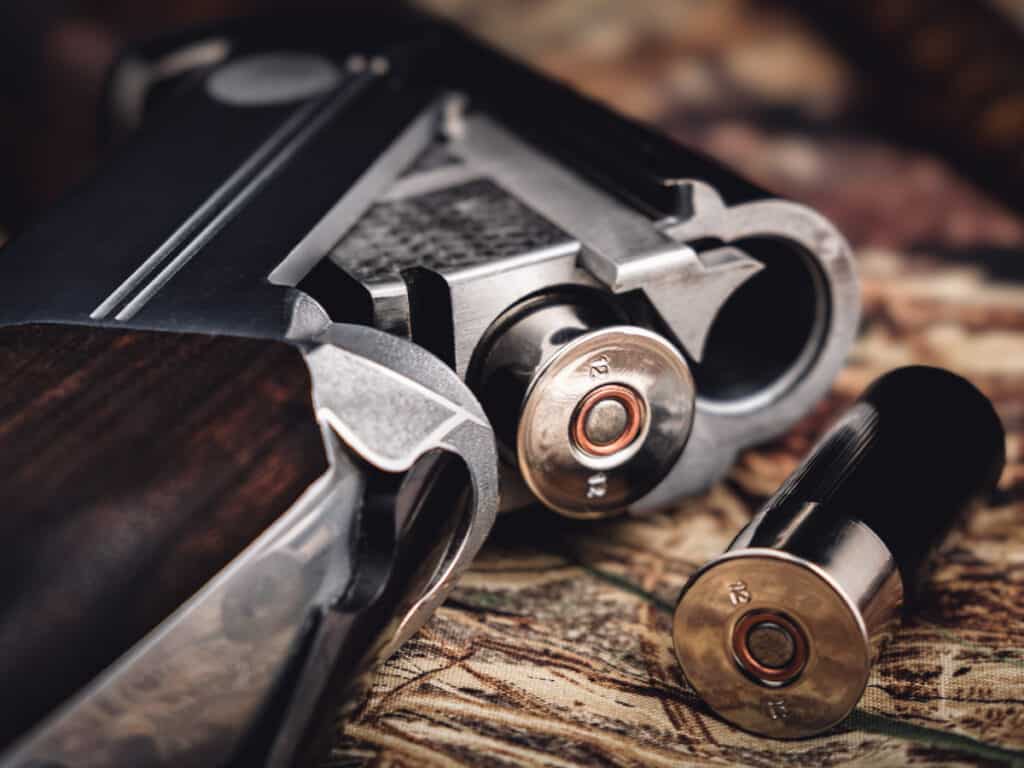
- Store your ammunition in a cool, dry place and separately from guns.
- Lock your firearms in a gun safe, safe or lockable storage cabinet.
- Oil sparingly in colder months to avoid freezing/jamming.
- Keep all firearms and ammunition securely away from children.
- Place a silica desiccant in your safe or lockbox to absorb moisture.
DON’T:
- Stow your ammunition near solvents, open flame or a heat source.
- Keep your ammunition with your firearms.
- Store a loaded gun!
- Store firearms in closed gun cases. You risk a moisture build-up that will wreak havoc on your firearms.
- Keep firearms and ammunition in the sun.
FURTHER READING:
Hunting Myths – Let’s remove the myths and get some facts right!
What Should Safe Hunters Always Have With Them When They Leave for a Hunt
Whether you’re a seasoned hunter or a beginner, everyone should carry a basic set of emergency gear into the woods for safety or if it comes down to it, survival. Here’s a list of essential items every hunter should carry.
1. Navigation Tools
Getting lost is all to easy, especially when hunting unfamiliar terrain. Ensure you always carry a compass and map or a GPS device to help you get back to your hunt camp or home.
2. First Aid Kit
It’s best to be prepared, as accidents can and will happen when you least expect it. Make sure you carry a well-stocked first aid kit, medicine and most importantly, trauma supplies like a CAT tourniquet. A tourniquet is the MUST-HAVE item in your pack!
3. Food and Water
Staying hydrated and fueled is important on long hunts. Always pack enough food (mres, protein bars, trail mix, dried fruit) and water for the entire trip. Don’t forget to carry a water filter or hydration system with you.
4. Appropriate Clothing
Dress in layers and wear durable, weather-appropriate clothing. Be prepared for sudden changes in weather, and don’t forget gloves, boots, and a hat. It’s also a good idea to pack extra socks, pants and a shirt. Remember to include your blaze orange shirt or other hunting orange attire to meet hunter orange requirements.
5. Fire Kit
Lastly, and just as important, if not more, is a fire kit. With a fire kit, you’ll always be prepared incase the weather turns, you’re in a survival situation, or to simply warm up and have a hot meal.
FURTHER READING:
Stay Prepared in the Field! Accidents happen especially outdoors. The Jase Medical Emergency Antibiotic Kit keeps essential antibiotics on hand for bites, scratches, or minor infections. Perfect for remote hunting trips.
A Final Thought on Hunting Safety
Hunting is engrained in our blood, as is self-preservation and instinct. What makes hunting a safe outdoor activity is your ability to hunt safely, adhering to rules and regulations and practicing firearm safety. Hunting safety is more than just carrying the appropriate gear. It’s about being conscious of your surroundings and using your best judgment when deciding whether or not to take that shot. It’s about having the right attitude and respect for other hunters and the environment, which allows hunting to be continued by many who rely on it.
Don’t forget, part of hunting safety is to perfect your aim with continuous target practice or trap shooting during the off-season.
👉 If you have a hunting safety tip that I missed, please let me know in the comments below.
Bookmark this post on Pinterest for future reference!